
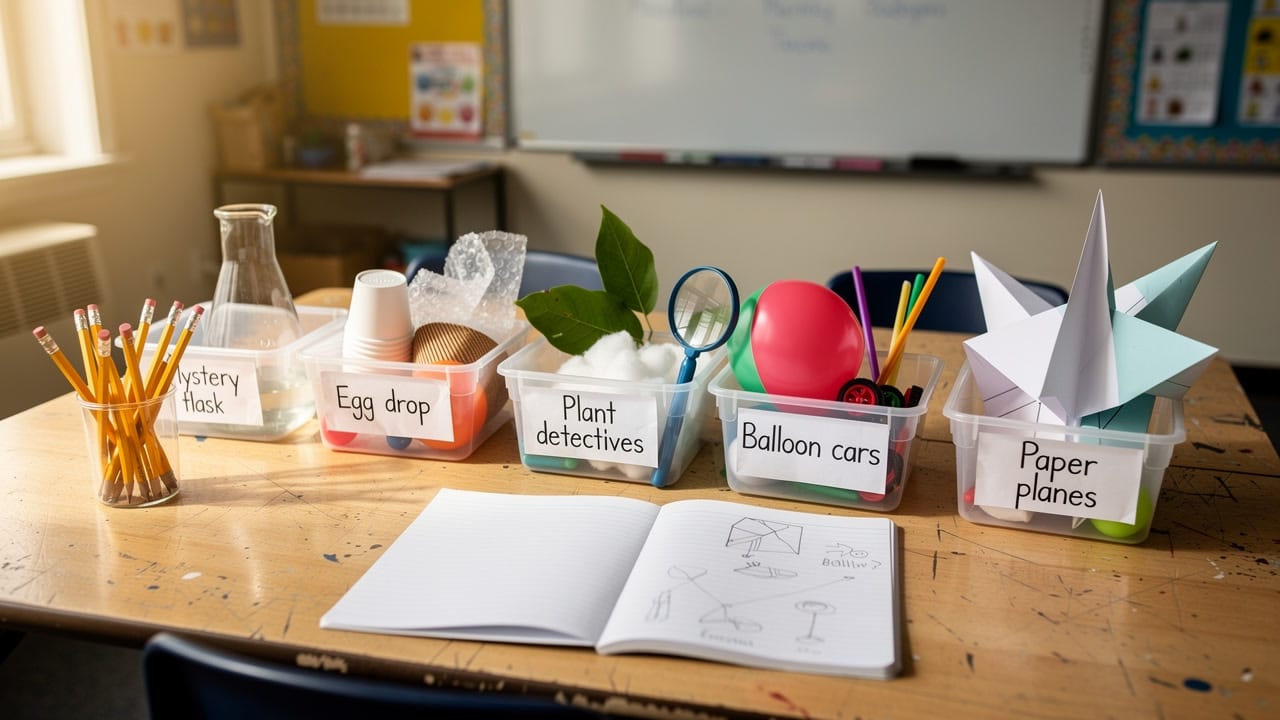
The first week is not the week you launch a 40-page unit. You are still learning names. You are still teaching how to walk to the carpet without a pileup. You also need one reason for kids to walk in tomorrow and think, we do real stuff in here.
This is five days. One activity a day. Each one fits in about 25 to 40 minutes if you keep the talking short and the doing long.
You do not need a full science block yet. You need a repeatable lab routine: ask a question, try something, notice what happened, write one sentence. Do that five days in a row and the rest of the year gets easier.
If you want the recording sheets and materials lists in one pack, the printable is on Teachers Pay Teachers: First Week Science Plan — 5-Day STEM Investigations for K–5 ($7).
How to run the week
Same four moves every day, so you are not inventing a new management system on Tuesday.
- Question on the board before they sit.
- Materials already in a bin. You are not sending 24 kids to a supply closet on day two.
- Try it. You talk less than they do.
- One sentence in a science notebook: I noticed… or I wonder…
K–2 can draw and label. Grades 3–5 can add a prediction. Same activity. Different recording.
If you have no outdoor space, every day still works inside. Indoor notes are under each activity.
Day 1 — Mystery flask
Why day 1
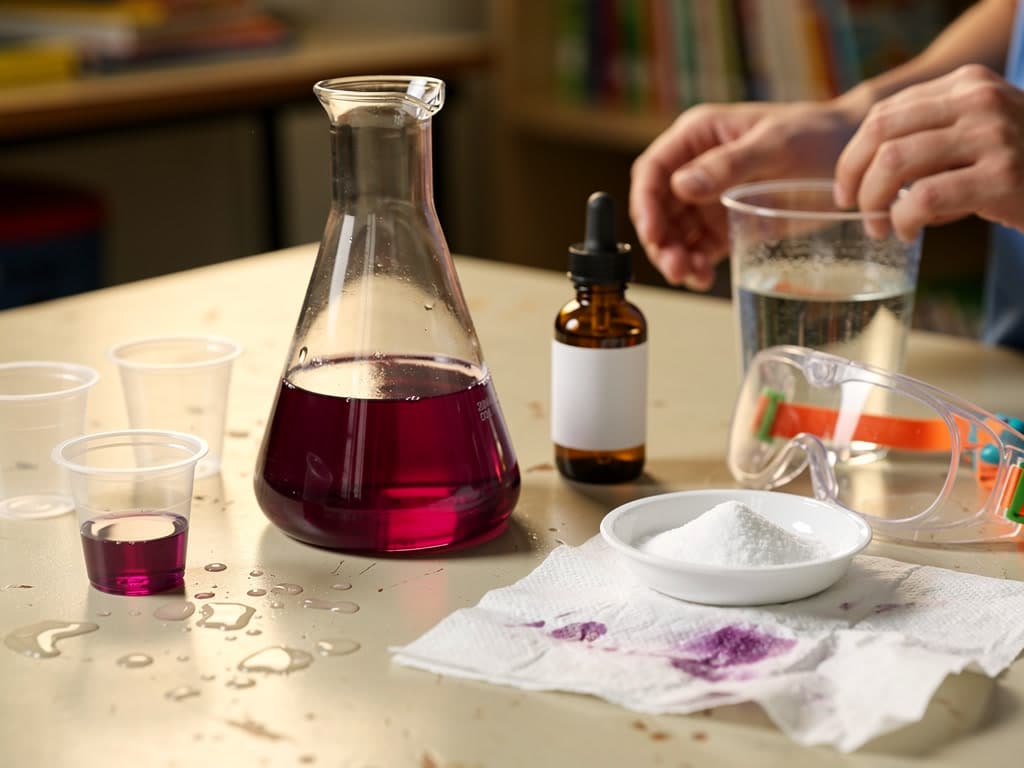
You want a wow that still has a real question. Color change does that. It also lets you teach “we don’t taste the science” on day one, which is not optional.
Question: What happens to this liquid when we add something new?
Materials
One demo flask, then small cups if you want partners:
- 1 clear bottle or flask
- Red cabbage leaves, or a bottle of red-cabbage indicator you made the night before
- Hot water, a strainer, two dropper bottles
- White vinegar
- Baking soda mixed with water
- Goggles
- Paper towels
Night-before prep: chop a few cabbage leaves, pour hot water over them, let it sit, strain. You get a purple liquid. That is your mystery flask.
How-to
- Hold up the purple flask. Do not explain pH. Ask what they notice.
- Split the liquid into two clear cups.
- Vinegar in one. Baking soda water in the other. Same amount. Slow.
- Kids call the new colors. Write them on the board.
- Notebook: I noticed the purple turned ___ when we added ___.
K–2: you do the pouring. They do the noticing.
3–5: partners get their own tiny cups and droppers. One change at a time.
Safety
Goggles on. No tasting. Vinegar and cabbage are kitchen-safe. Still treat it like a lab.
Indoor: this one was always indoor.
Day 2 — Egg drop
Why day 2
First-week teamwork without a fake trust fall. Also: constraints. You will use that word all year.
Question: How can we keep an egg from cracking when it falls?
Materials
Per pair or trio:
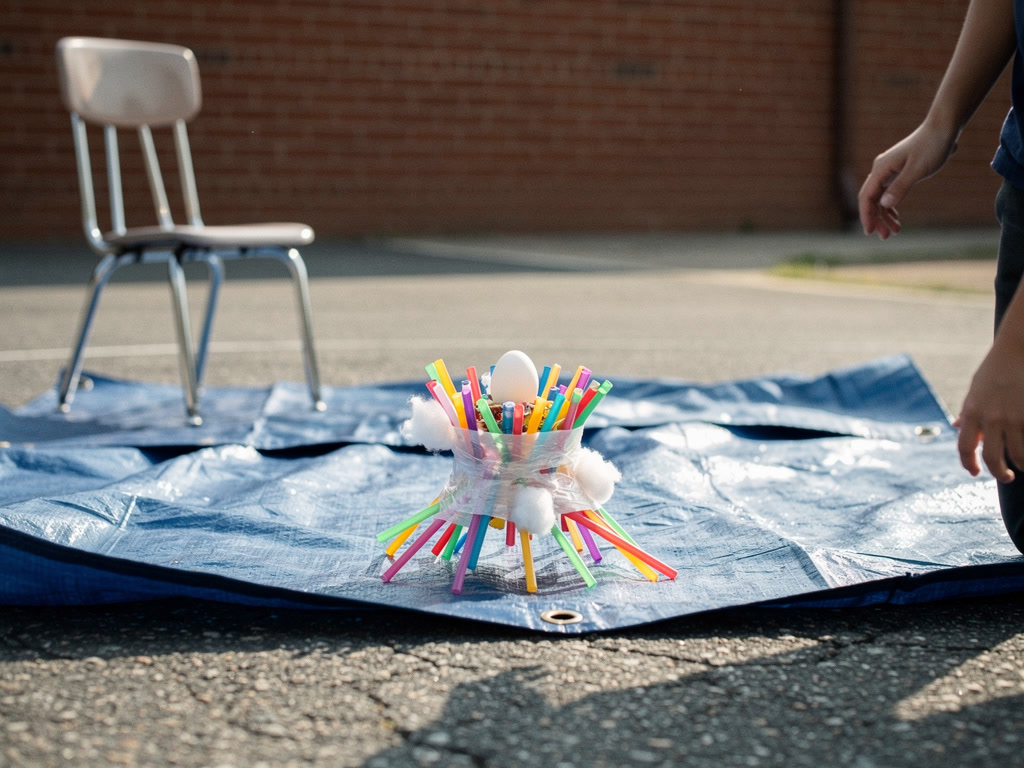
- 1 raw egg (or a plastic egg with a wet paper towel inside if you are not ready for yolk on the sidewalk)
- 8 straws
- 4 cotton balls or 1 sheet of newspaper
- 12 inches of tape
- A tarp or cardboard landing zone
- A chair or table as the drop height
How-to
- Show the material limit. That is the whole point. They do not get the closet.
- Eight minutes to build. Timer on the board.
- Drop from the same height. Every group. No do-overs until every group has gone once.
- Crack or no crack. Honest.
- Notebook: The egg cracked / did not crack because…
K–2: one build per table, adult drops.
3–5: pairs, they drop, they measure if you want (yardstick from seat to floor).
Safety
Outside or on a tarp. You hold the chair. Wash hands. Have a trash bag ready.
Indoor: drop onto a tarp from a chair. Do not use a stairwell on week one.
Day 3 — Plant detectives
Why day 3
You need a quieter day after the egg. This one trains eyes. First-week science is half noticing. If you want more outdoor noticing later in the year, we have a longer list of forest school activity ideas.
Question: What can we tell about a plant just by looking closely?
Materials
- Science notebooks
- Pencils
- A clipboard if you have them
- 1 leaf or small plant sample per pair (schoolyard, playground planter, or a grocery-store herb if your campus is all concrete)
- Optional: celery stalk, glass of water, red food coloring
How-to
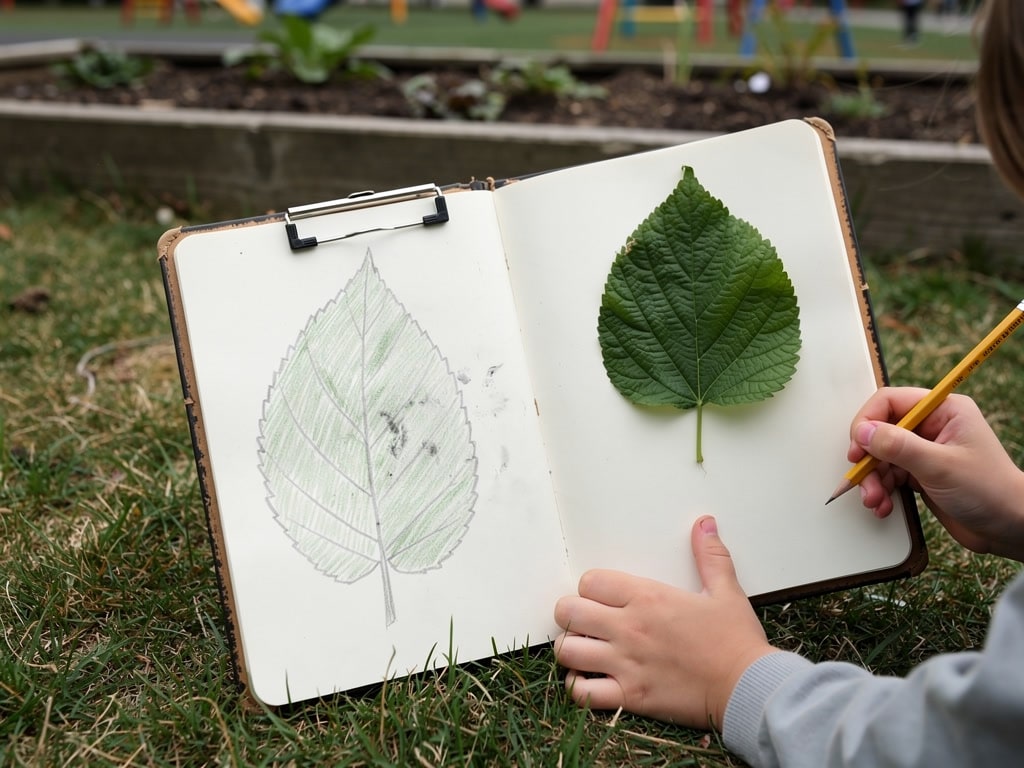
- Model one look. Edge, veins, color, holes, bugs, dry spots. You are not naming every species. You are slowing them down.
- Ten minutes outside or at the windowsill. Each pair picks one plant or one leaf.
- Draw it big. Label three things they actually see.
- Share one noticing with the class. Chart: “Our schoolyard plants…”
- Notebook: I noticed ___ . I wonder ___.
K–2: walk as a line, you assign the plant.
3–5: they choose, they compare two leaves.
Optional extra: stand a celery stalk in red water before lunch. Check it before they stack chairs.
Safety
No tasting plants. No picking from a neighbor’s garden. Wash hands.
Day 4 — Balloon cars
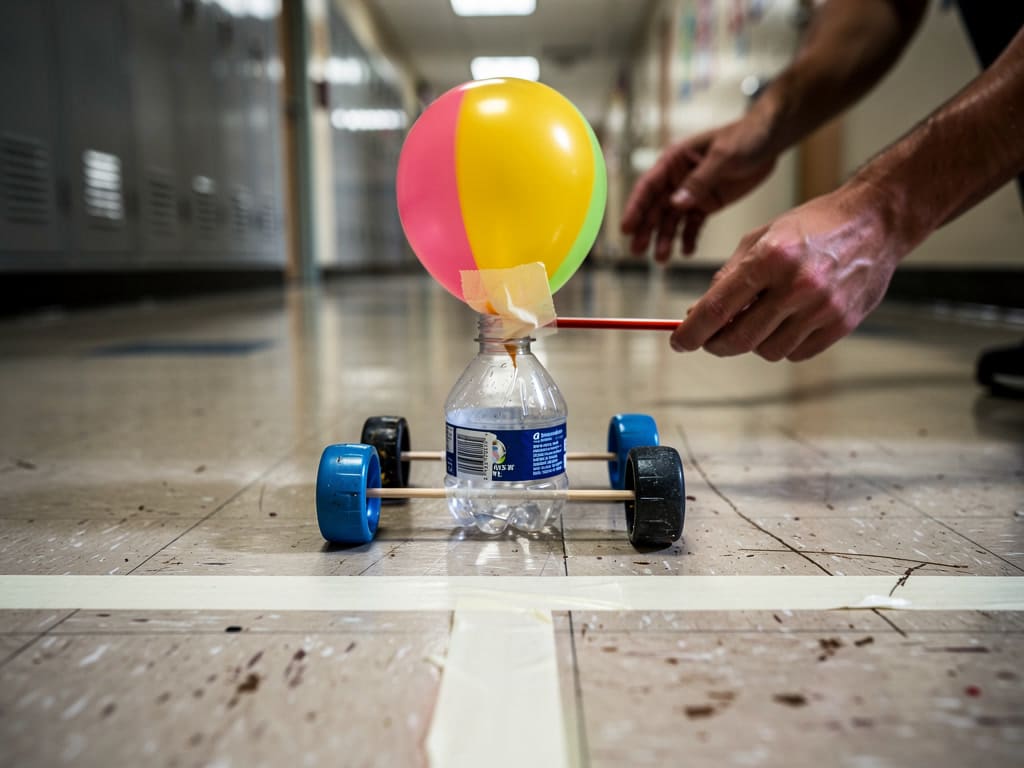
Why day 4
Energy, motion, and a reason to use the hallway without it turning into recess.
Question: How can air make a car move?
Materials
Per pair:
- 1 empty water bottle or small cardboard box
- 1 balloon
- 1 straw
- Tape
- 4 bottle caps or cardboard wheels, plus two skewers or extra straws for axles
- A start line (masking tape)
How-to
- Show one working car. One. Then put it away.
- Build. Tape the straw into the balloon neck so air has a path.
- Test on the same floor. Same start line.
- One change if there is time: more air, less tape, smoother wheels.
- Notebook: Our car moved / did not move. I think it is because…
K–2: no-wheel sleds. Balloon and straw on a folded piece of cardboard.
3–5: wheels if you have the caps. Sleds are still science if you do not.
Safety
No launching at faces. Pick up blown-out balloons. Latex allergy: plastic bag air pouch, or skip to paper planes a day early for that group.
Indoor: hallway, two pairs at a time. The rest record or rebuild.
Day 5 — Paper planes
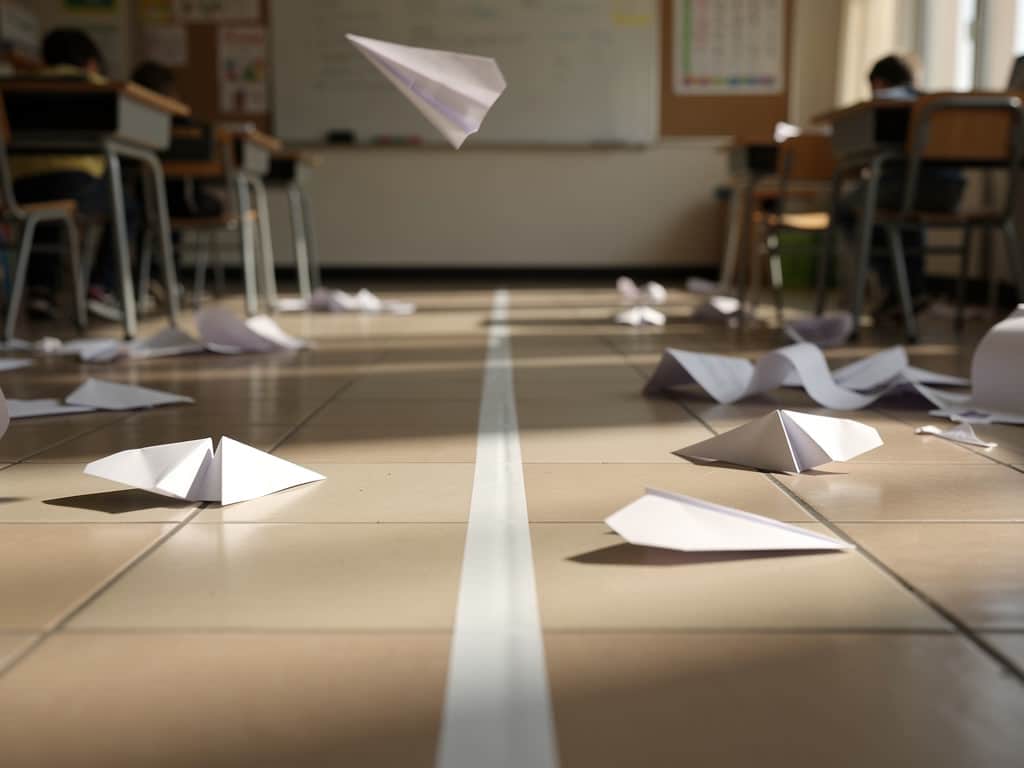
Why day 5
Cheap, fast, and it lets you end the week with a fair test.
Question: What one change makes a plane fly farther?
Materials
- Copy paper (same size for everyone)
- A tape measure or floor tiles
- A start line
- Notebooks
How-to
- Everyone builds the same first plane. You model one simple fold.
- Three throws. Record the best. Tiles count.
- Now they get one change. One. They write the change before they throw.
- Three more throws.
- Notebook: I changed ___. The plane went farther / shorter / about the same.
K–2: mark near / middle / far with cones. Skip the numbers.
3–5: record tiles or feet.
Safety
Throw in one direction. No aiming at people. Recycle the wrecks.
Friday close (two minutes): “This week we asked a question, tried something, and wrote what we noticed. That is science in this room.” Then stack chairs. No quiz.
If you only remember three things
Keep the materials in bins before the bell. The lesson dies in the hunt for tape.
Same notebook prompt all week. I noticed. I wonder.
One activity a day is enough. The 25-idea lists are for Sunday night. This is for the week you are actually teaching.
If you are still mapping the rest of the first week, our weekly themes for preschool and the Teaching archive are the next places to look.