
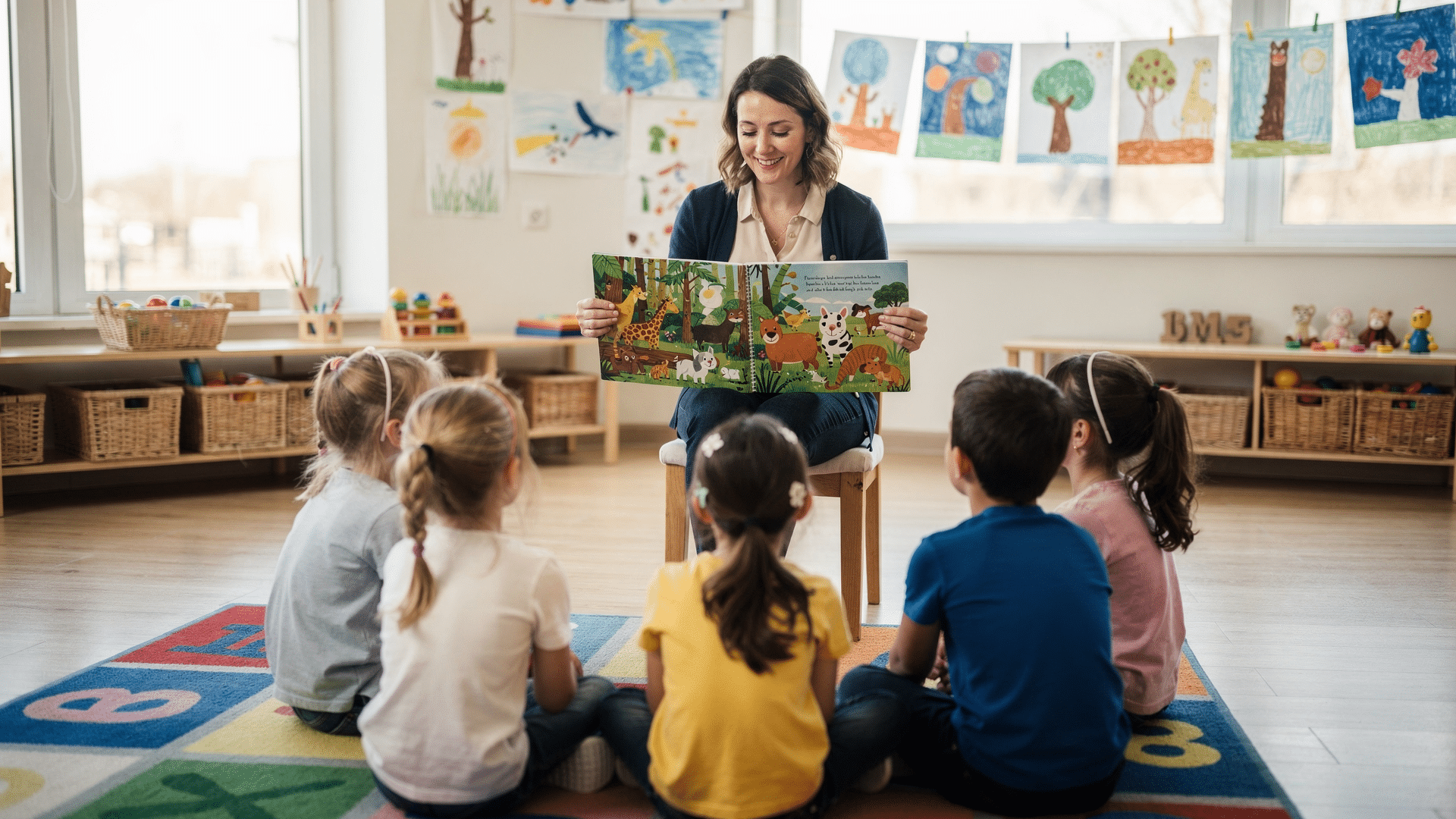
Before kindergarteners can talk about a story, they have to know how a book works. Concept of print is that map: front cover, back cover, spine, title, author, illustrator. Characters and setting come next. Who is in it, and where it happens. This is the first comprehension block of the year, not a packet of worksheets.
The cover walk is week one. The three activities below are how you check it. Art, a class book, and a two-minute sort. Not a quiz.
Concept of print (week-one moves)
Sit so everyone can see the cover. Point as you name:
- Front cover: This is the face of the book.
- Back cover: flip it.
- Spine: This is how it stands on the shelf.
- Title: read it with your finger under the words.
- Author: The person who wrote the words.
- Illustrator: The person who made the pictures. (If it is the same person, say that.)
Do this with one real book a day for a week. Same language every time. Then hand a child the book and ask them to show you the cover, the title, the author. That is the check. Not a quiz.
A simple three-day cycle
Day 1: concept of print on the cover before you read.
Day 2: read, then Who is it about?
Day 3: same book, Where are they?
Repeat with a new book the next week. Do not skip the cover walk to get to the art.
Activity 1 — Character and setting art
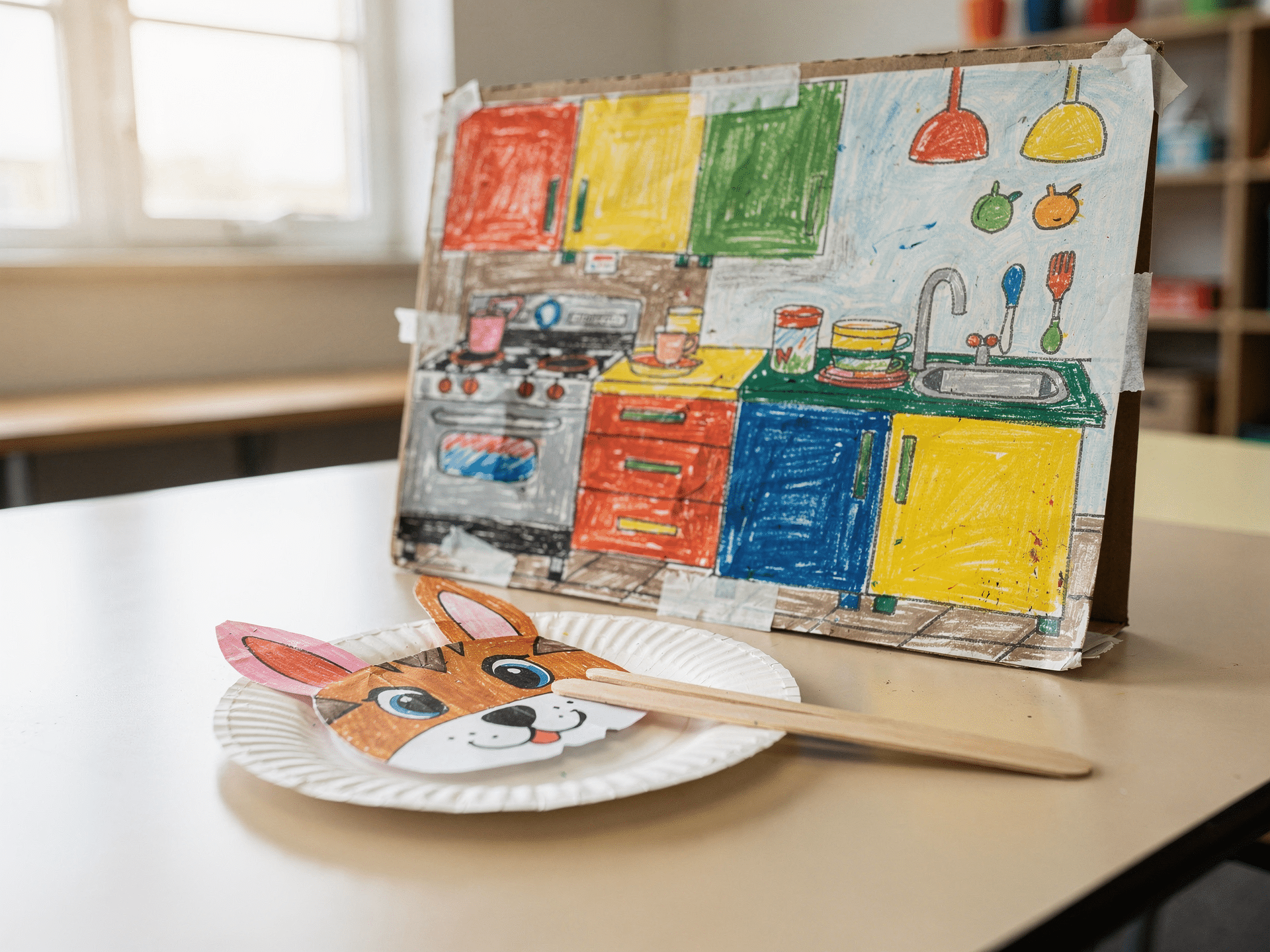
After a read-aloud, half the class makes the place. The other half makes the person. Put them together. Then ask two questions only.
Why this one
Who and where are the first comprehension questions that actually stick in kindergarten. A painted kitchen and a paper-plate character give them something to point at.
Materials
- One familiar read-aloud with a clear main character and one clear place
- A big sheet of paper or cardboard for the setting
- Paint, crayons, or markers
- Paper plates, craft sticks, or cut-out paper for the character
- Tape so the character can stand in the setting
How-to
- Read the book. Then: Who is this story about? Where are they? Name the one character and the one place.
- Split the job. Half paints the setting. The other half makes the main character.
- Put the character in the setting. Tape is fine.
- Ask two questions only: Who is this story about? and Where are they?
Keep it to one character and one place.
What done looks like
A child can point to the puppet and say the name, then point to the painted place and say where.
Activity 2 — Make a real class book
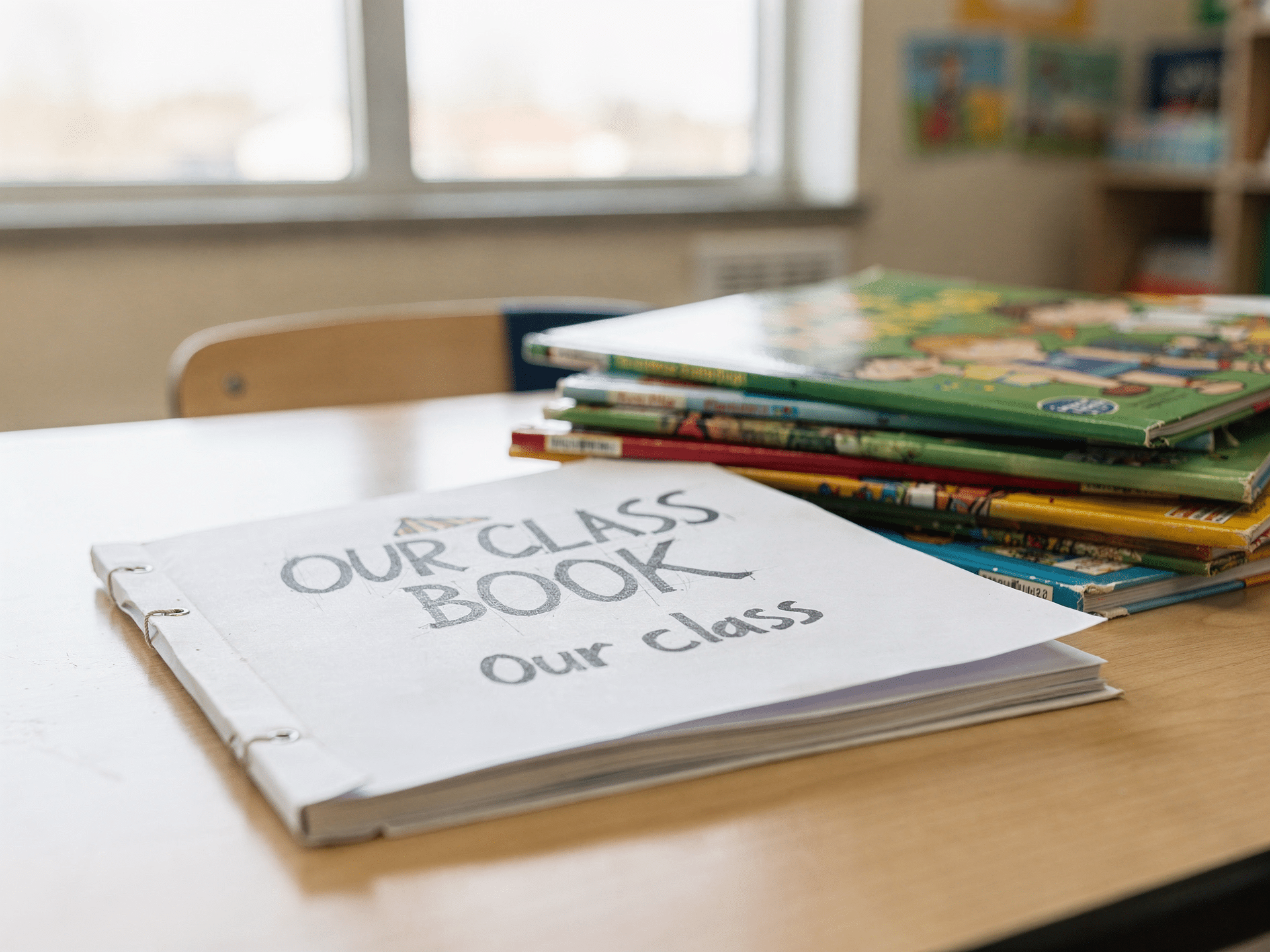
They make a book with a cover, a back, a spine, and a title. Then they do the cover walk on their own book.
Why this one
Concept of print on a store book is a lecture. Concept of print on a book they made is theirs.
Materials
- Enough pages for the class, plus a front cover, a back cover, and a spine label
- Stapler, rings, or binding combs
- Markers for the title and Our class as the author line
- Crayons. One page per child
How-to
- Title it something they said that week. Author line: Our class. Write both on the cover before they draw.
- Each child gets one page. A drawing and one dictated sentence is enough.
- Staple or bind. Add the spine label. It has to stand on a shelf like a real book.
- The next day, do the cover walk on their book.
What done looks like
A child can hold the class book and point to cover, spine, title, and author without you naming them first.
Activity 3 — Book hospital
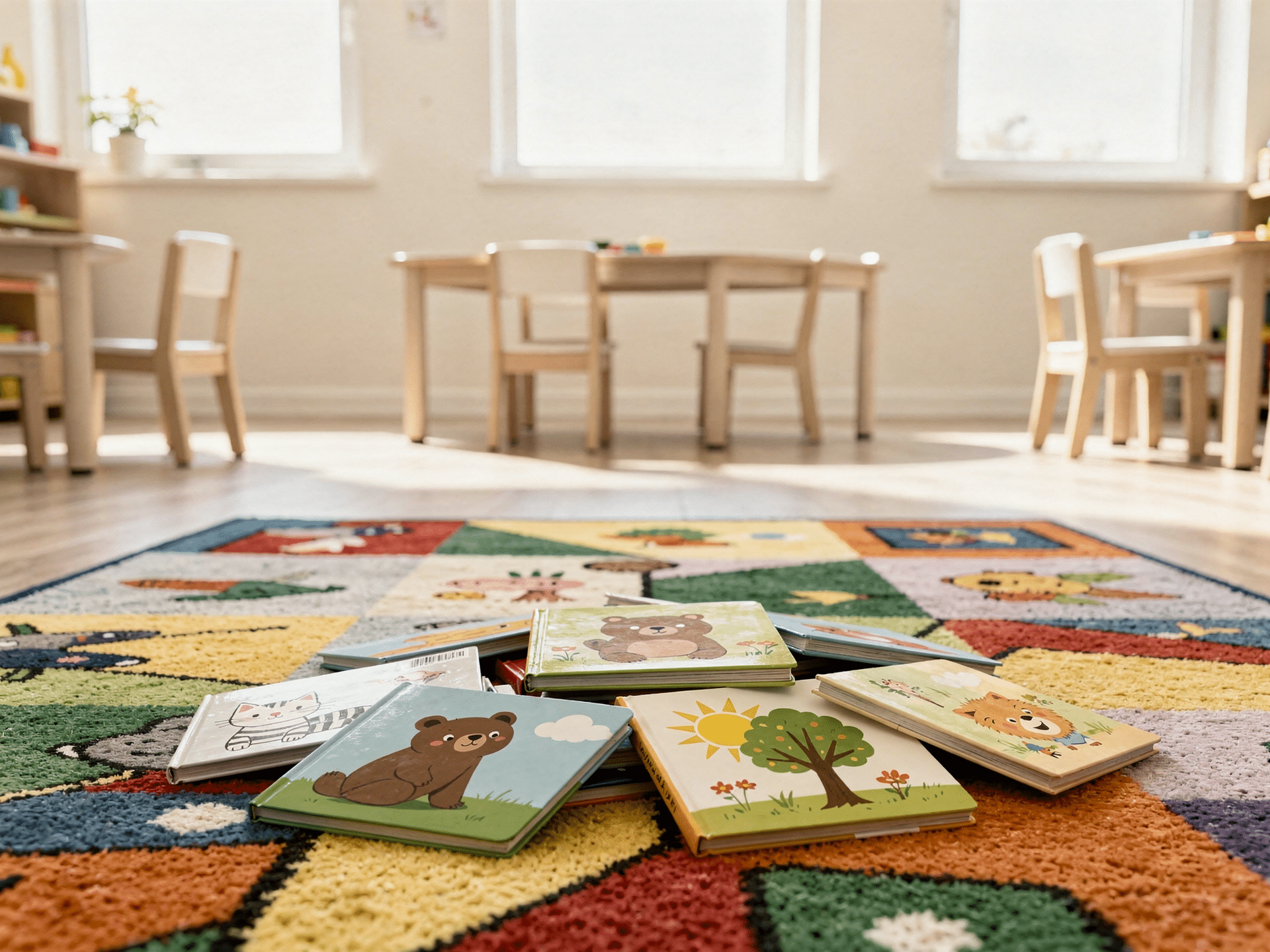
A pile of classroom books on the rug. They sort what they can name on the cover, then you point and they say the part.
Why this one
Two minutes. No art. This is the check after the class book. If a cover has no clear title, say so. That is a real thing, not a trick.
Materials
- A pile of real classroom picture books, mixed
- Two spots on the rug: I can find the title and I need help
How-to
- Dump the pile. Kids sort into the two spots.
- Pick one book from each pile. Point. They say cover, spine, or title.
- If a book has no clear title on the cover, hold it up and say that.
- Two minutes. Then stack the books. You are not repairing torn pages.
What done looks like
Most of the class can point to the title on a familiar cover and the spine when the book is standing.
Characters
A character is who the story is about. In kindergarten, start with the main character only.
After a read-aloud, ask: Who is this story about? Have them point to the picture, then say the name.
- How do they feel? (Use the picture.)
- What did they want?
Setting
Setting is where and when. Kindergarten can do where first.
Ask: Where are they? Offer two picture choices if the book is busy (kitchen vs park).
When they are ready: Is it day or night? That is enough when.
What not to do
Do not skip the cover walk because you are in a hurry to get to the real questions. For five-year-olds, the cover walk is the real question. Do not turn the art into a craft-for-the-hallway that never gets the who/where talk.