
Kindergarten high-frequency words are the little words kids meet constantly: the, is, you, said. If those are automatic, the rest of the sentence has room to be read. This is the full-year list from our kindergarten pacing, grouped so you can teach in sets instead of one word a day forever.
The list is at the bottom. The three activities are the point. Same materials all year. Swap the words.
How to use the list
Pick one set for the week. Put the words on a small ring, a pocket-chart card, and one easy sentence. Five minutes at the start of literacy is enough. Do not make a new printable for every week. One mat, one game, swap the words.
Four quick moves keep the set in their mouth before you get to the making:
- See it: flash the card, kids say it.
- Build it: magnetic letters or dry-erase.
- Find it: highlighter in a familiar poem or the morning message.
- Use it: one oral sentence, then one written sentence when they are ready.
Activity 1 — Word art
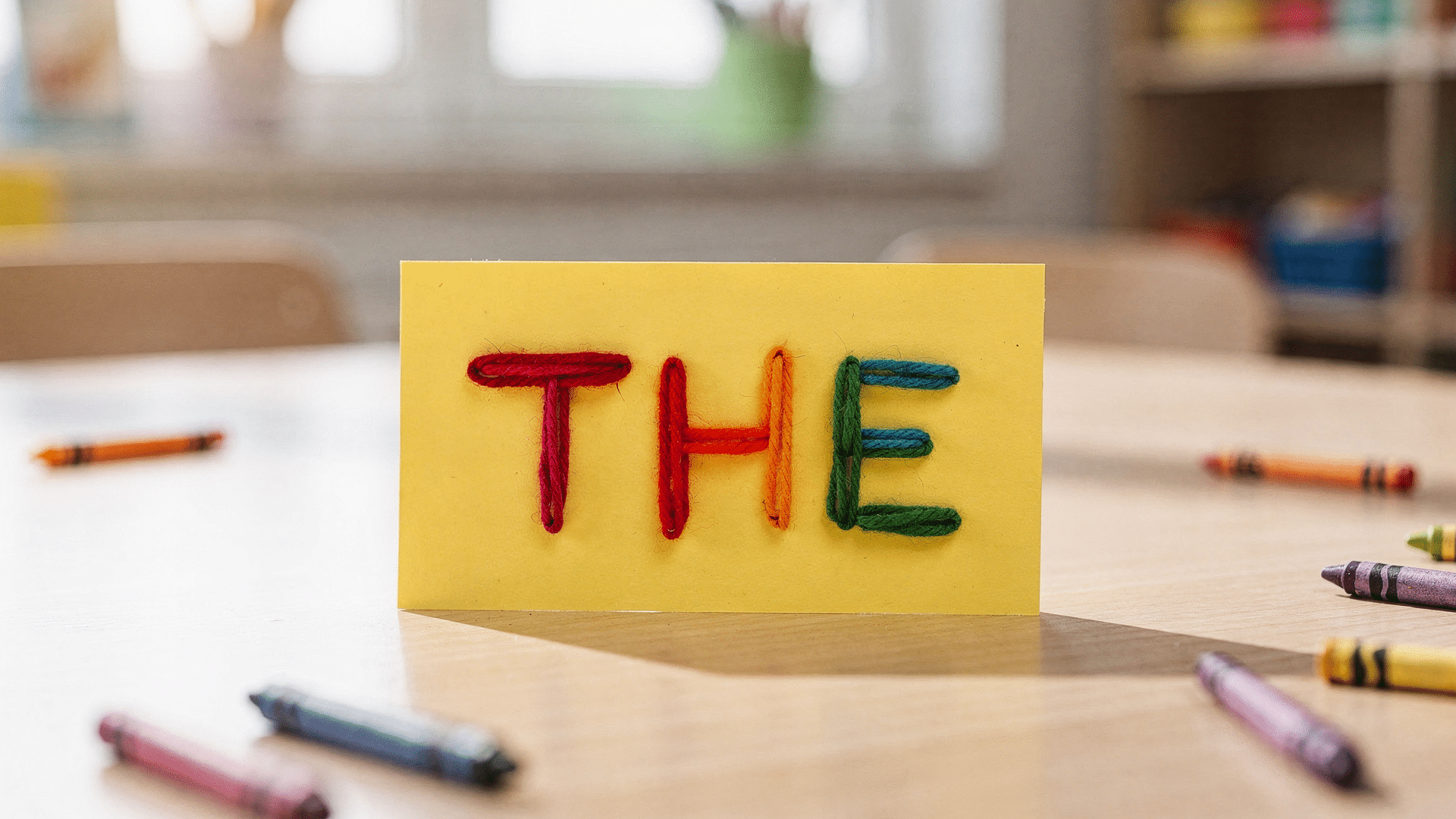
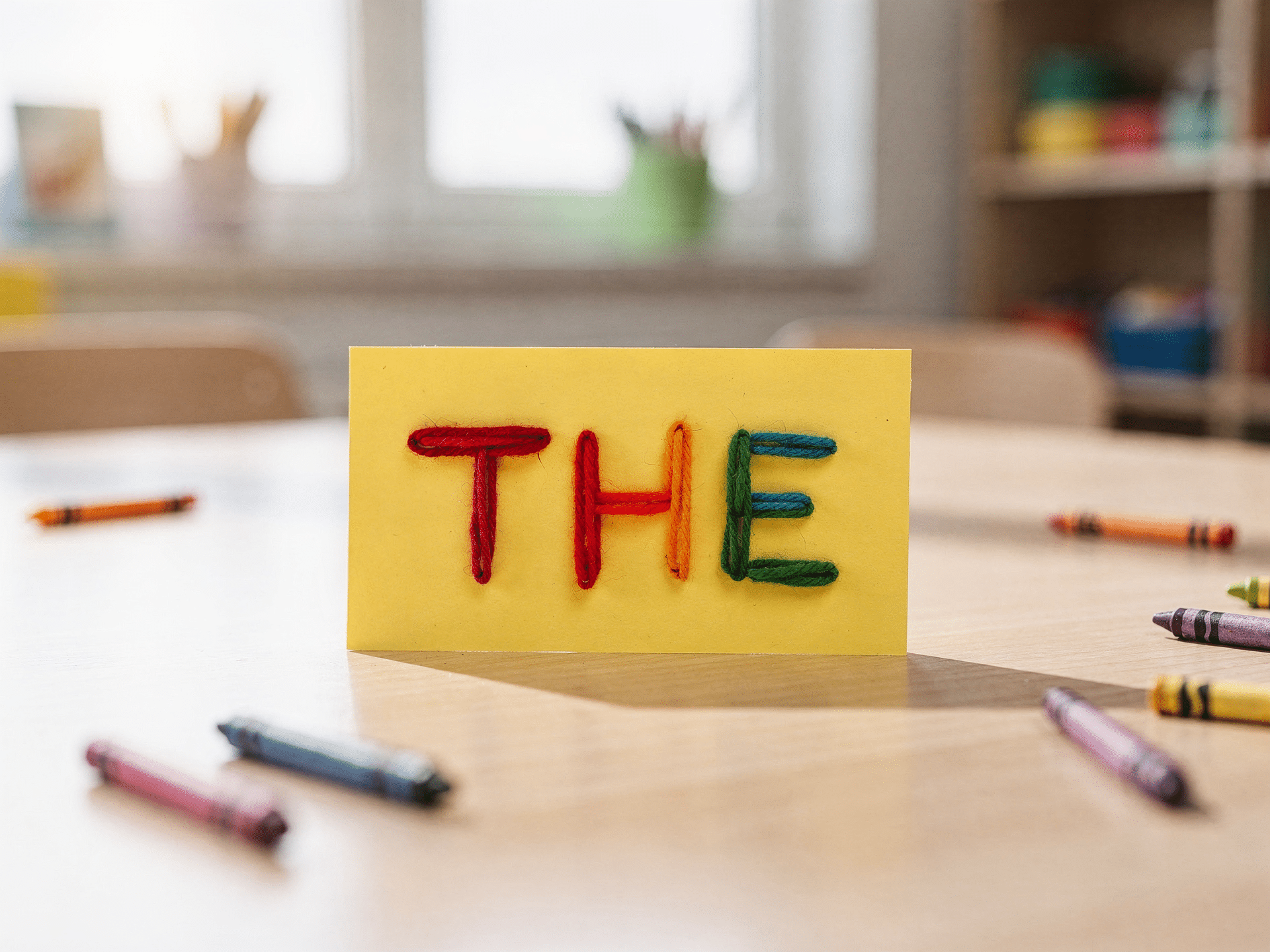
They make the word. Yarn, collage, or paint. If they cannot read it when it is dry, it is decoration, not the activity.
Why this one
A flash card is your tool. The art is theirs. Tracing the letters with yarn or cutting them from a magazine forces the shape into their hands, not only their eyes. Hang the finished set in the order you taught it and the wall becomes the week’s list.
Materials
- One word card per child, written big, from this week’s set only
- Yarn, glue, and cardstock; or magazines and scissors; or paint and construction paper
- A string or a pocket chart to hang the finished words
How-to
- Give each child one word. Say it. They say it. Point to each letter once. Then put your card away.
- They make that word as art. Yarn glued along the letters, collage letters cut from magazines, or paint the word on construction paper. The art is the word.
- When it is dry, they read it to you. If they cannot, they trace it with a finger and try again. Do not hang a word they cannot say.
- Hang the finished set on a string in the order you taught it. Next week, new words, same process.
One word per child is enough. Do not send home a packet of 32. If you have extra time, they can make a second word from last week as review.
What “done” looks like
You can walk the string and they can read their own word and the two next to it. If they only recognize the color of the yarn, it is not done.
Activity 2 — Hop the word
You say a word. They hop to it, say it, and use it in one oral sentence. Five minutes. No cards in their hands.
Why this one
Some kids will sit and stare at a card all week and still guess from your lips. Moving to the word and saying it out loud is a different check. The sentence after the hop is the real test: they have to use the word, not only find it.
Materials
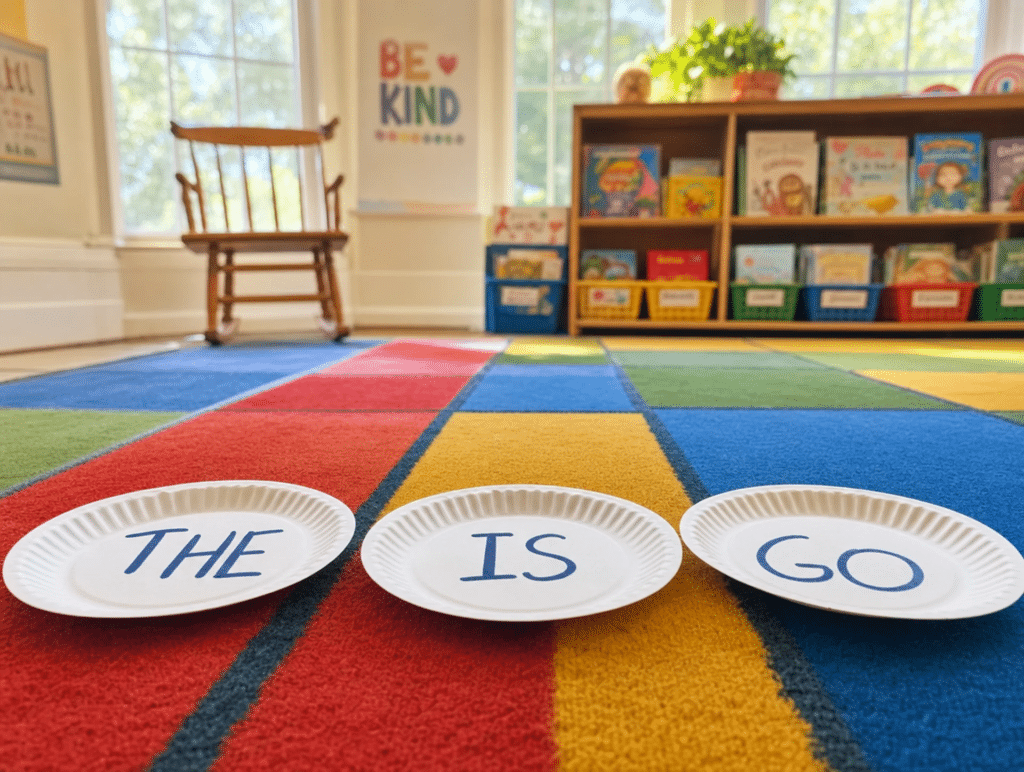
- This week’s words, one per paper plate, written big in the same color
- Or sidewalk chalk if you can go outside
- A clear floor or rug. Nothing else in their hands
How-to
- Lay three to five plates on the rug, words facing up, far enough apart that a hop is a hop.
- You say a word. They hop to that plate and say it. Then they use it in one oral sentence before they sit or hop back.
- If a child is watching your mouth, point to the plate and wait. Do not repeat the word until they are standing on it.
- Swap one plate for a word from last week if they are flying through this week’s set.
Five minutes. Whole group or a station of four. You are not building an obstacle course.
What “done” looks like
They land on the right plate without looking at a friend, say the word, and make a sentence that actually uses it. “The cat is fat” counts. “I like pizza” after hopping on THE does not.
Activity 3 — Stamp a silly sentence
They build one sentence with this week’s words, then draw the picture that proves they meant it.
Why this one
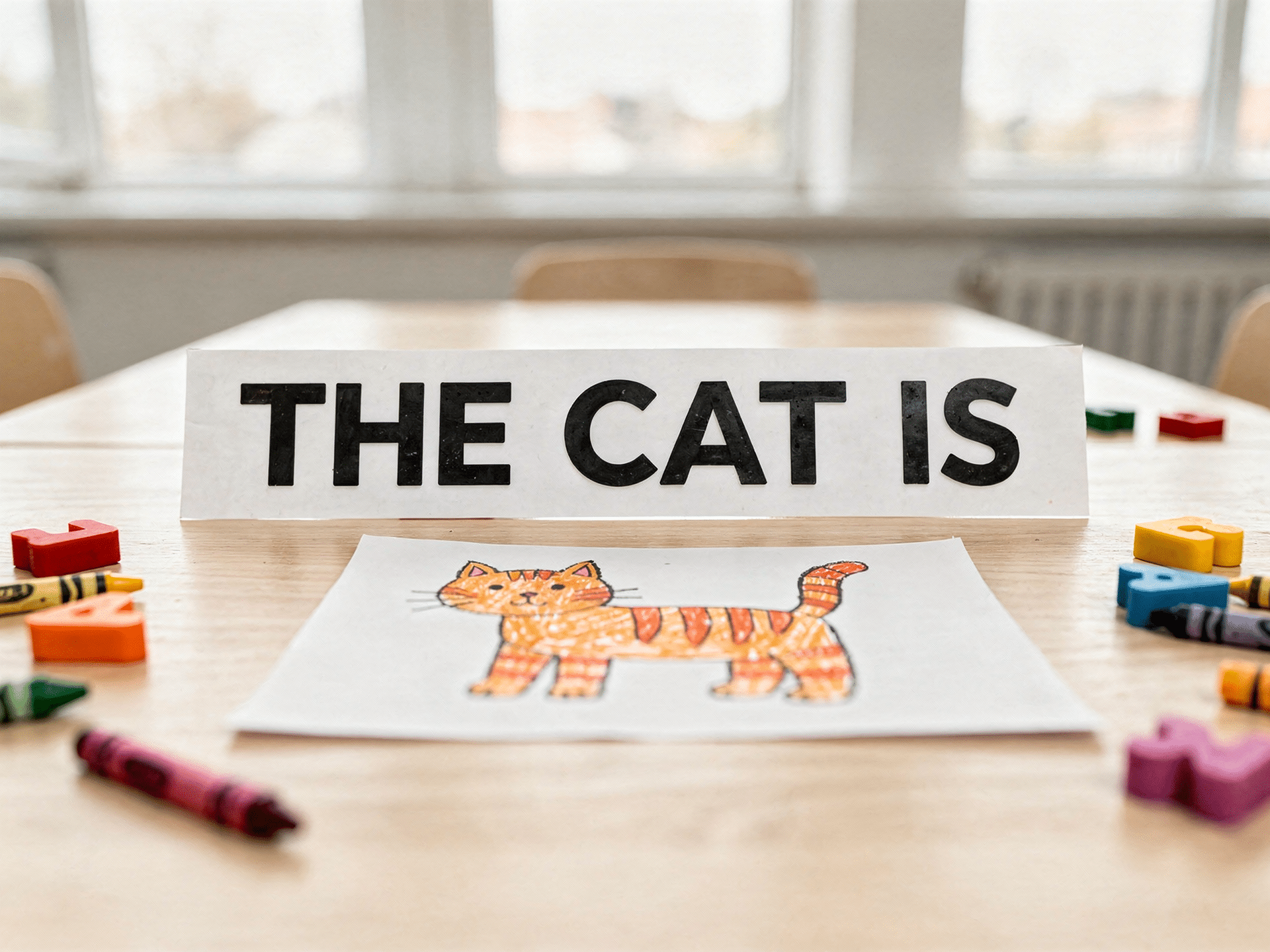
Flash and hop stay at the word. This one puts two or three words in a row. The picture under the strip is the check. If they stamped THE CAT IS and drew a cat, they used the words. If they stamped I AM and drew a dinosaur, they were playing with stamps.
Materials
- Letter stamps or magnetic letters
- One long paper strip per child (or a sentence strip)
- Crayons
- This week’s word cards visible, plus one card from last week
How-to
- Show one model strip. A short sentence that uses two words from this week and one from last week. Read it. Point to each word.
- They build one sentence on their strip. You write any word they cannot stamp yet. Do not let the sentence become a paragraph.
- They illustrate the sentence under the strip. The picture has to match the words.
- Read it back together. If the picture and the words do not match, they fix one of them. Not both at once.
What “done” looks like
A readable sentence and a picture that matches. “The cat is” plus a cat. That is the whole activity. Save the strips. Next week they can read last week’s sentence before they stamp a new one.
Quarter 1 sets
Set 1: am, I
Set 2: a, the
Set 3: an, and
Set 4: is, of
Set 5: go, no, so
Set 6: do, my, to
Set 7: into, said, not
Quarter 2 sets
Set 8: he, she, me
Set 9: are, as, you
Set 10: see, was
Set 11: for, or
Set 12: her, his
Set 13: this, with, your
Set 14: good, look
Set 15: all, says, they
Set 16: each, little, like
Set 17: from, have, more
Quarter 3 sets
Set 18: about, out
Set 19: be, get, very
Set 20: what, when, who
Set 21: does, goes
Set 22: only, other
Set 23: off, which
Set 24: again, day, say
Set 25: by, my, try, why
Set 26: first, friend, half
Quarter 4 sets
Set 27: any, many, pretty
Set 28: front, know, two
Set 29: saw, talk, walk
Set 30: come, love, some
Set 31: always, also, with
Set 32: every, after, seven
A few words show up more than once (my, with). Treat those as review, not a new list.
Keep it small
If a child is stuck, drop back one set. Fluency on 10 words beats a fuzzy 40. Send the current set home on a bookmark, not a packet. The art, the hop, and the stamped sentence stay in the room.