
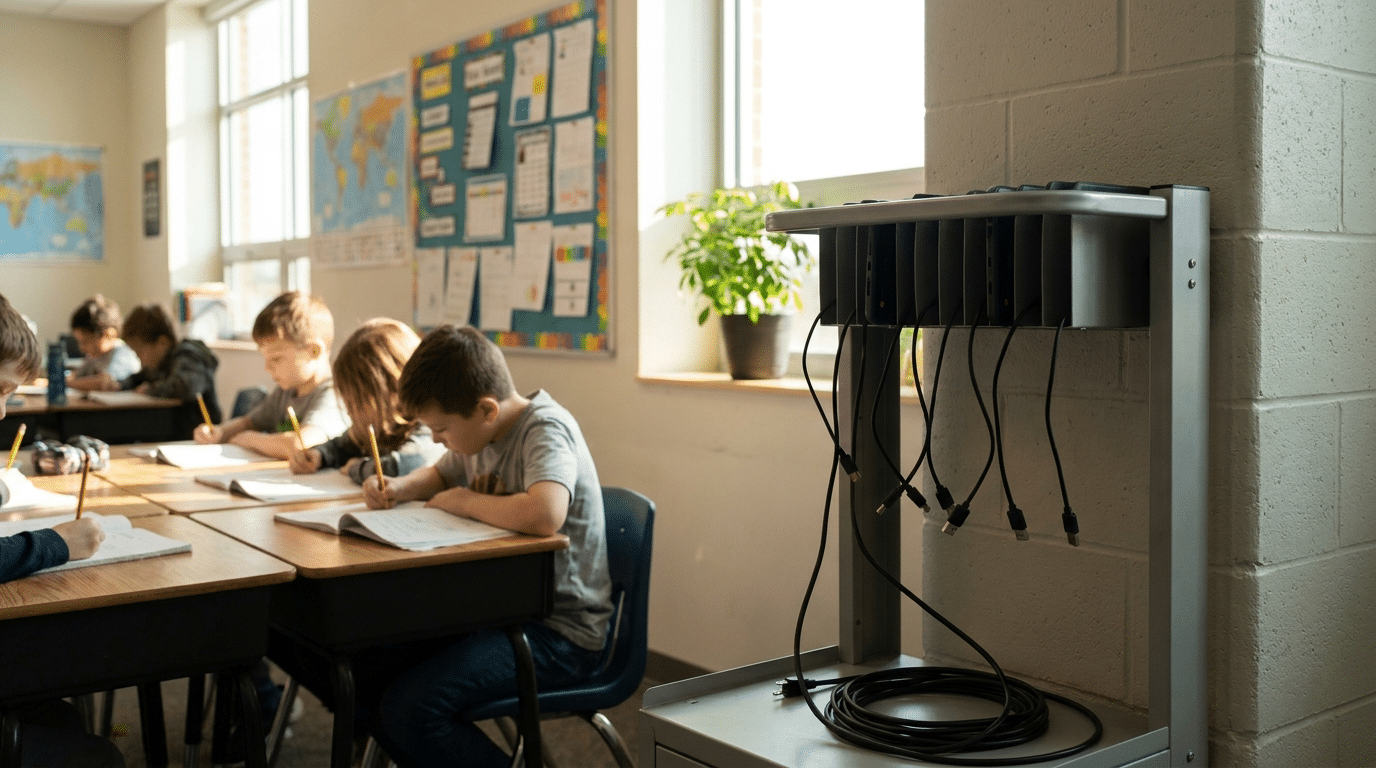
On June 23, 2026, the San Diego Unified school board voted 5–0 to restrict classroom technology — banning YouTube and gaming platforms on student devices, pulling Chromebook carts from TK–2nd grade, and setting district-wide device time limits by winter break.
Millions Went Into the Devices in the First Place
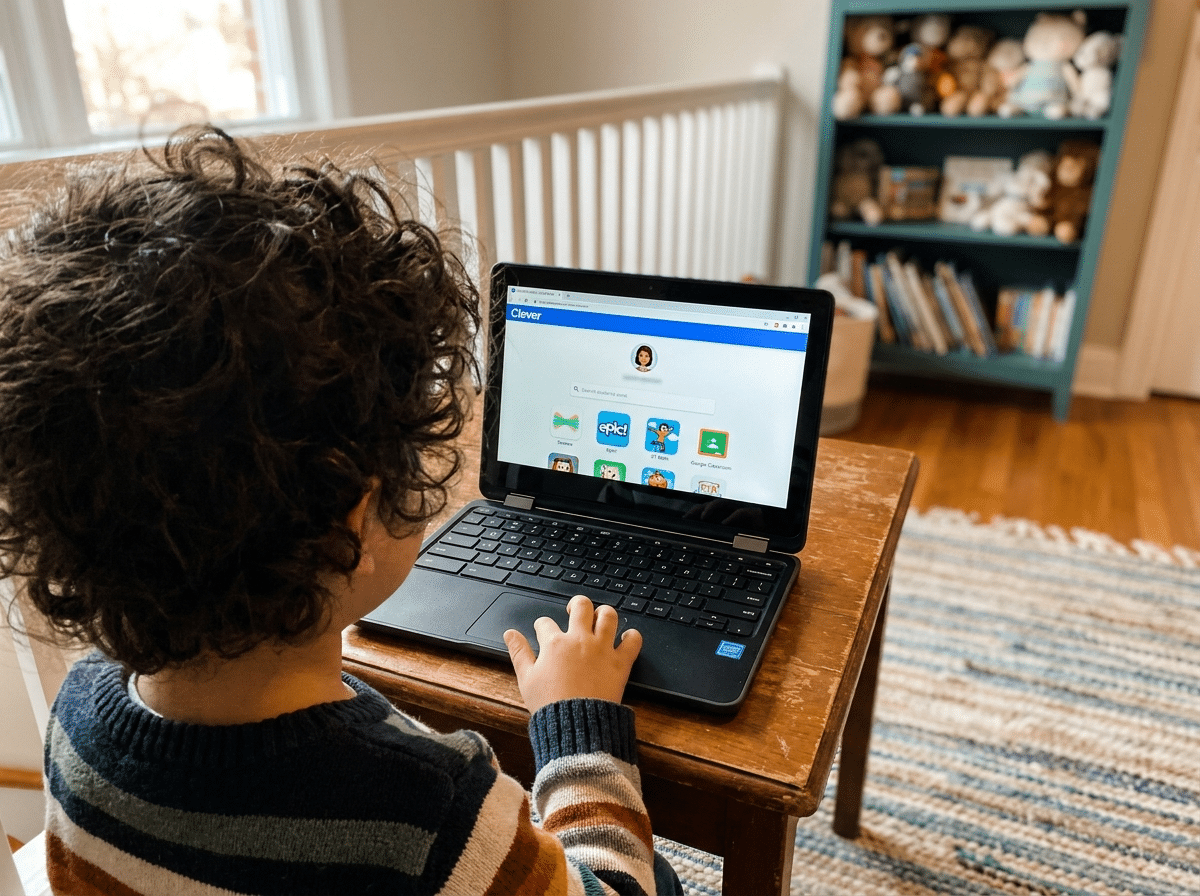
Over the last decade, San Diego Unified built one of the largest school device programs in California. The district runs a 1:1 Chromebook program covering roughly 47,000 of its 132,000 students, and in 2020 alone it pushed out more than 47,000 laptops to keep kids learning through the pandemic. Chromebooks now cost the district about $450 each to replace — meaning the current device fleet represents an estimated $21 million investment, and that’s before counting software licenses, IT staff, or infrastructure.
For years, that investment was treated as an unambiguous win. Devices meant every student had access to the same digital tools, the same test-prep software, the same online research resources — regardless of what they had at home.
Then Parents Started Pushing Back
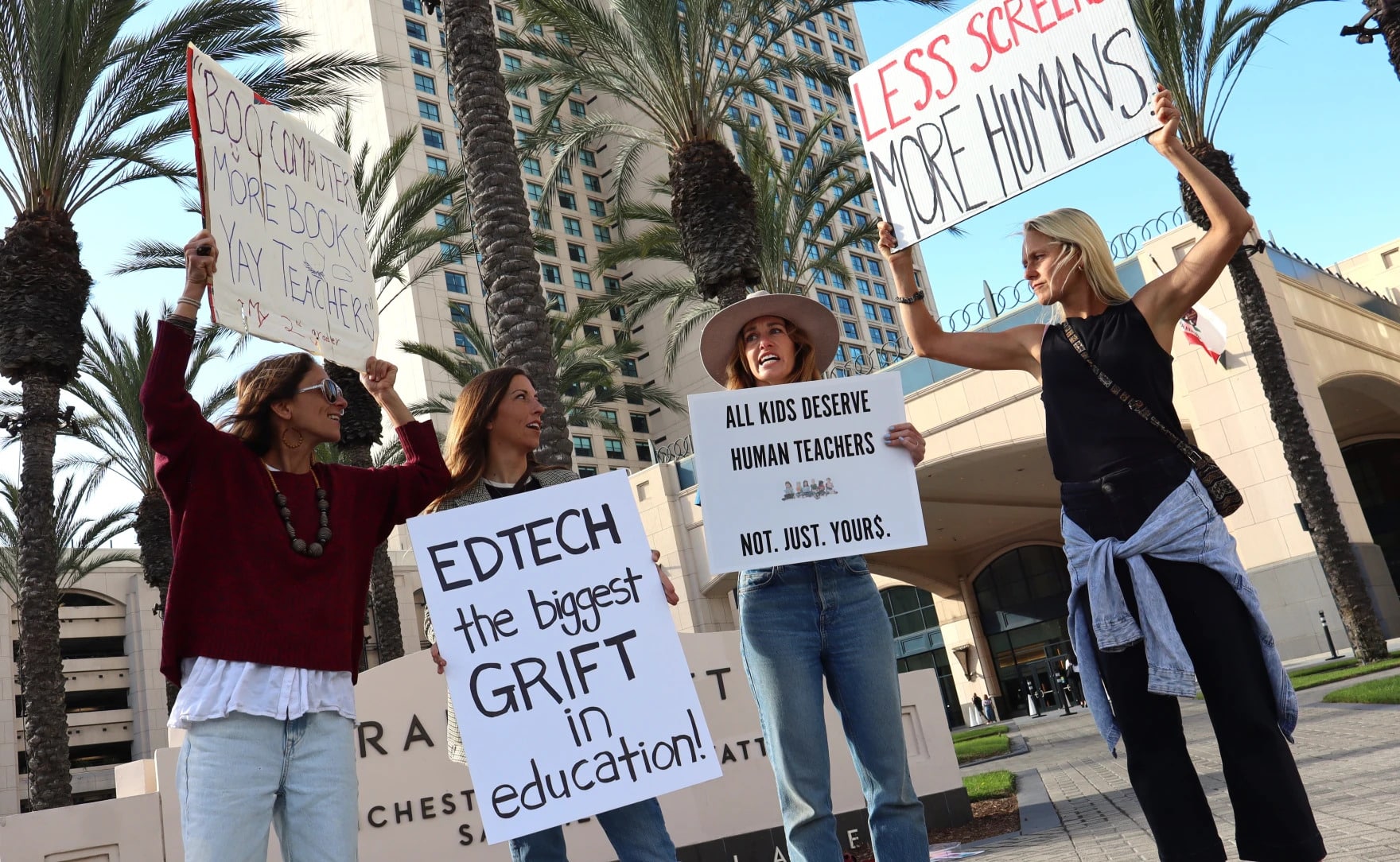
That consensus started cracking this year. A parent group called Schools Beyond Screens spent months organizing San Diego families around a simple complaint: kids were spending too much of the school day looking at screens instead of doing hands-on learning, and district-issued devices were giving children access to content parents never approved.
The group showed up to board meetings, gathered signatures, and pointed to a similar fight already playing out 120 miles north, where Los Angeles Unified was in the middle of drafting its own screen-time crackdown.
The Vote That Changes Everything
On June 23, 2026, the San Diego Unified school board voted 5–0 to approve a resolution called Learner-Centered Technology Use that Prioritizes Student Learning, Safety, and Wellness. It’s the first time the district has formally reversed course on the devices it spent years rolling out.
“Technology should be a tool that supports teachers’ work, not a substitute for the relationships, human interaction, professional judgment and critical thinking at the heart of a great education,” board member Shana Hazan said, according to KPBS.



What’s Actually Changing (and What Isn’t)
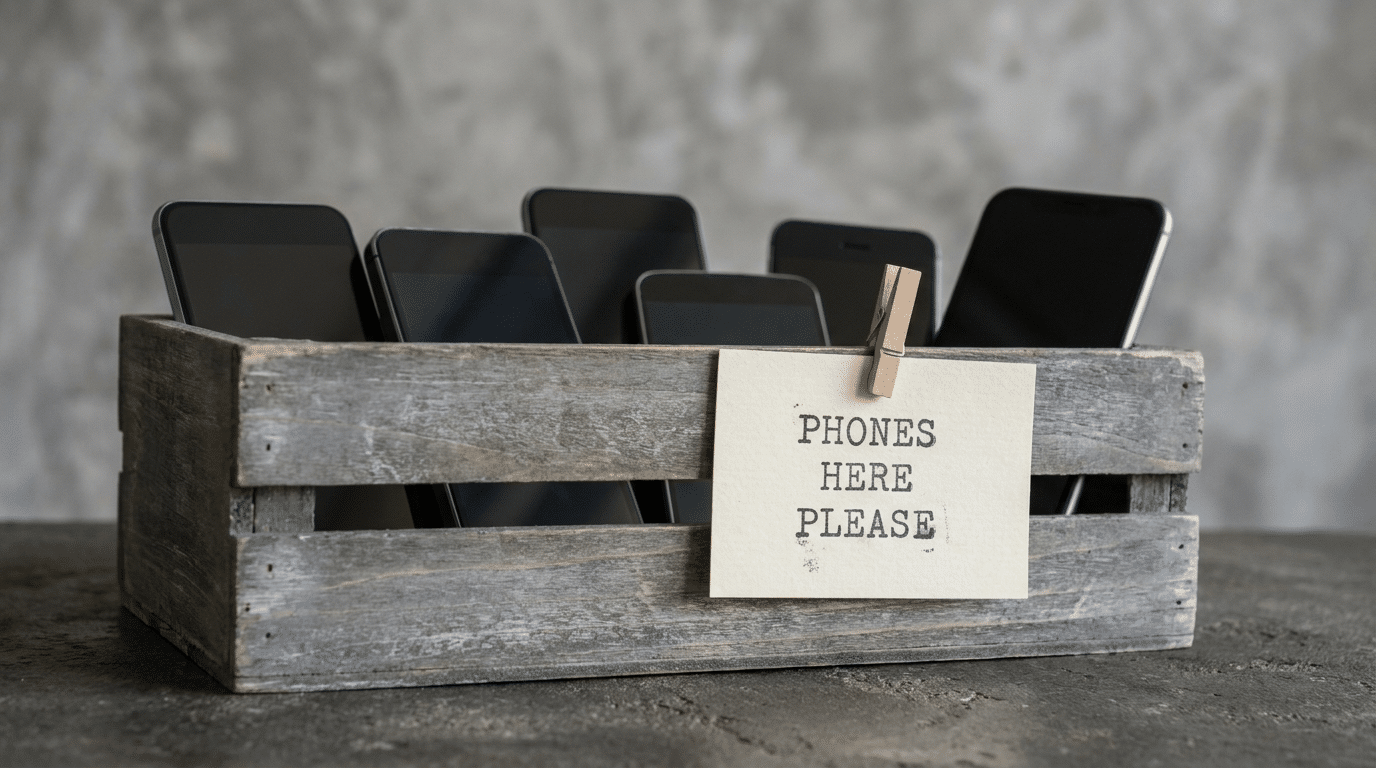
The rollout is gradual, not immediate. Starting this fall, students lose access to YouTube and other video-streaming and gaming platforms on district-issued devices, and Chromebook carts begin disappearing from transitional kindergarten through second-grade classrooms. Later in the year, the district will publish grade-level guidance for when and how devices should be used, factoring in subject, language needs, and student disability — and it will restrict AI software unless the district specifically approves it, along with cutting ads on school-distributed devices. District-wide time limits on Chromebook use are set to arrive by winter break.
It’s a phased plan, not a full withdrawal — devices aren’t leaving classrooms, but the free rein they’ve had for the better part of a decade is ending.
Not Everyone Thinks It Goes Far Enough
Schools Beyond Screens spokesperson Erin Payne called the resolution “a great first step toward future, measured reform” — but other parents in the group wanted more. Elizabeth Johnson, one of the group’s leaders, had pushed for the resolution to include a formal opt-out option for Chromebook use in class entirely. It didn’t make the final version.
“We’ve got hundreds of parents who are absolutely planning, on day one of the 2026-2027 school year, very respectfully, addressing their teacher and saying, ‘You know, respectfully, we would like our child to opt out of Chromebook use,'” Johnson said after the meeting. “This is absolutely happening. So I think it was a missed opportunity to not talk about this in this resolution.”
San Diego’s version is also notably softer than what Los Angeles Unified approved the very same week. LA’s policy bans screen use entirely through second grade, sets daily and weekly limits for every other grade, and requires families to formally opt in before a device can even go home with their child.
The Money Question No One’s Answered Yet
Payne also used her time at the podium to press the district on something it hasn’t disclosed: exactly how much it spends on educational technology each year. “This is a public, taxpayer-funded institution after all,” she told the board.
The district hasn’t published that figure. But the device costs alone — an estimated $21 million to replace the current 1:1 fleet at today’s prices — give some sense of scale. And there’s a wrinkle that undercuts the district’s own safety argument for devices: only about 1,400 families districtwide have activated Blocksi, the parental-control software SDUSD already provides for free. Board member Shana Hazan said the district has “work to do to educate families” about tools that, for now, sit largely unused.
What Happens Next
The district’s technology team is scheduled to give the board a full progress update in January 2027, covering how the YouTube and gaming restrictions played out and what the grade-level device guidance will look like. Until then, San Diego families are heading into a school year where the devices are still in backpacks — just with considerably shorter leashes than the year before.
Frequently Asked Questions
What did San Diego Unified vote to change?
On June 23, 2026, the board voted 5-0 to ban YouTube and gaming platforms on student devices, remove Chromebook carts from TK-2nd grade, restrict AI software and ads on district devices, and set district-wide Chromebook time limits by winter break.
How much has San Diego Unified spent on classroom technology?
The district hasn’t published an official total. Device costs alone are estimated at $21 million to replace its current 1:1 Chromebook fleet (47,000 devices at roughly $450 each), not counting software, staff, or infrastructure.
When do the changes take effect?
The YouTube and gaming restrictions, along with the TK-2nd grade Chromebook cart removal, begin with the 2026-27 school year. Grade-level device guidance and AI/ad restrictions follow later in the year, with district-wide time limits set by winter break.