
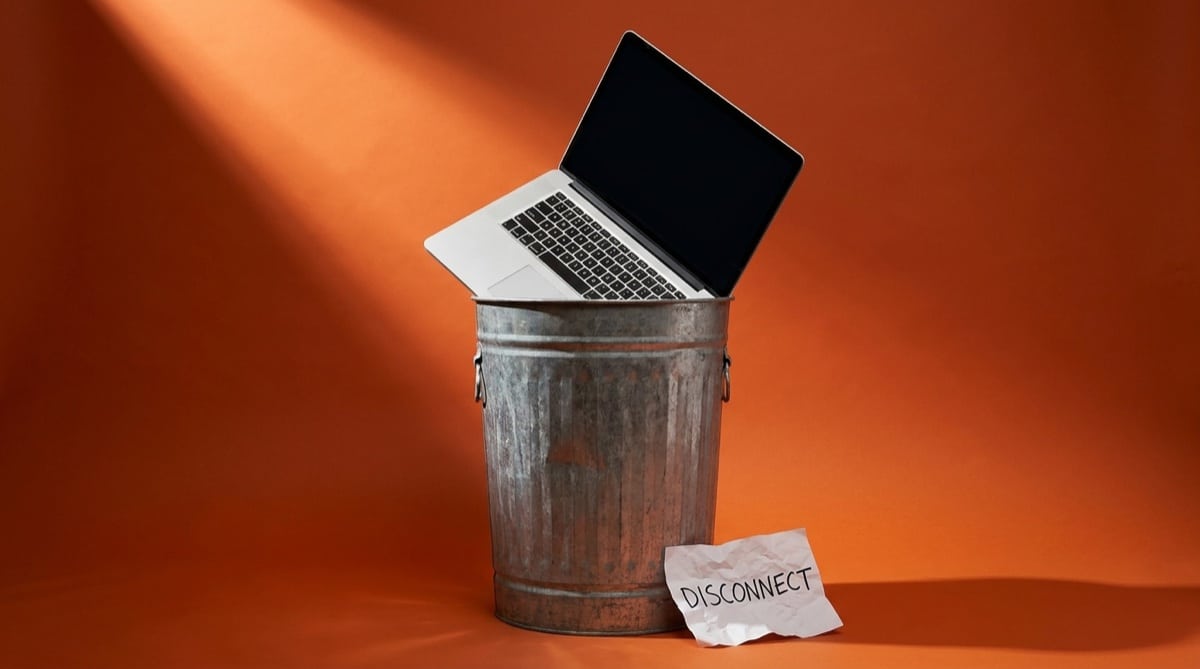
A growing number of schools, led by McPherson Middle School in Kansas, are asking students to return their Chromebooks and switch back to pen and paper — a backlash against a decade of one-to-one classroom device programs.
Every teacher knows the feeling. You’re mid-lesson, something’s finally clicking, and you glance across the room. Half the class is somewhere else entirely — not daydreaming, not passing notes — staring at a screen. You ask a student to close their laptop. They do. You turn around. It opens again.
For the better part of a decade, schools across America doubled down on that moment. The answer, the thinking went, was more technology — better devices, faster Wi-Fi, one-to-one Chromebook programs. The pitch was compelling: digital fluency, personalized learning, 21st-century skills. Billions of dollars flowed into edtech. Google became the dominant force in American classrooms. By the early 2020s, Chromebooks held roughly 60 percent of the K–12 device market.
But teachers kept noticing things that the sales pitch hadn’t prepared them for. Students using school Gmail accounts to taunt each other. Kids pulling up YouTube the moment a teacher turned to the board. Seventh graders who couldn’t focus for ten minutes without a notification pulling them somewhere else. And quietly, in staff rooms across the country, a question started forming: Is this actually working?
The data, when schools started looking honestly at it, wasn’t encouraging. Test scores hadn’t improved the way early adopters had promised. Reading comprehension was declining. And something harder to measure — the quality of attention in a classroom, the depth of a student’s engagement with an idea — felt like it had quietly eroded. Teachers who had been enthusiastic early adopters of edtech were beginning to ask for their blackboards back.
Now, a growing movement of educators, parents, and school administrators is acting on what those teachers had been saying for years. And it started with a decision in a small Kansas town that would have been unthinkable ten years ago.
A Kansas School Makes a Bold Call
In December 2025, McPherson Middle School in Kansas sent a letter home to families of its 480 students. The message was simple: please return your Chromebook. The school was done with them — not as a punishment, not as a temporary experiment, but as a considered, deliberate shift in how it wanted its students to learn.
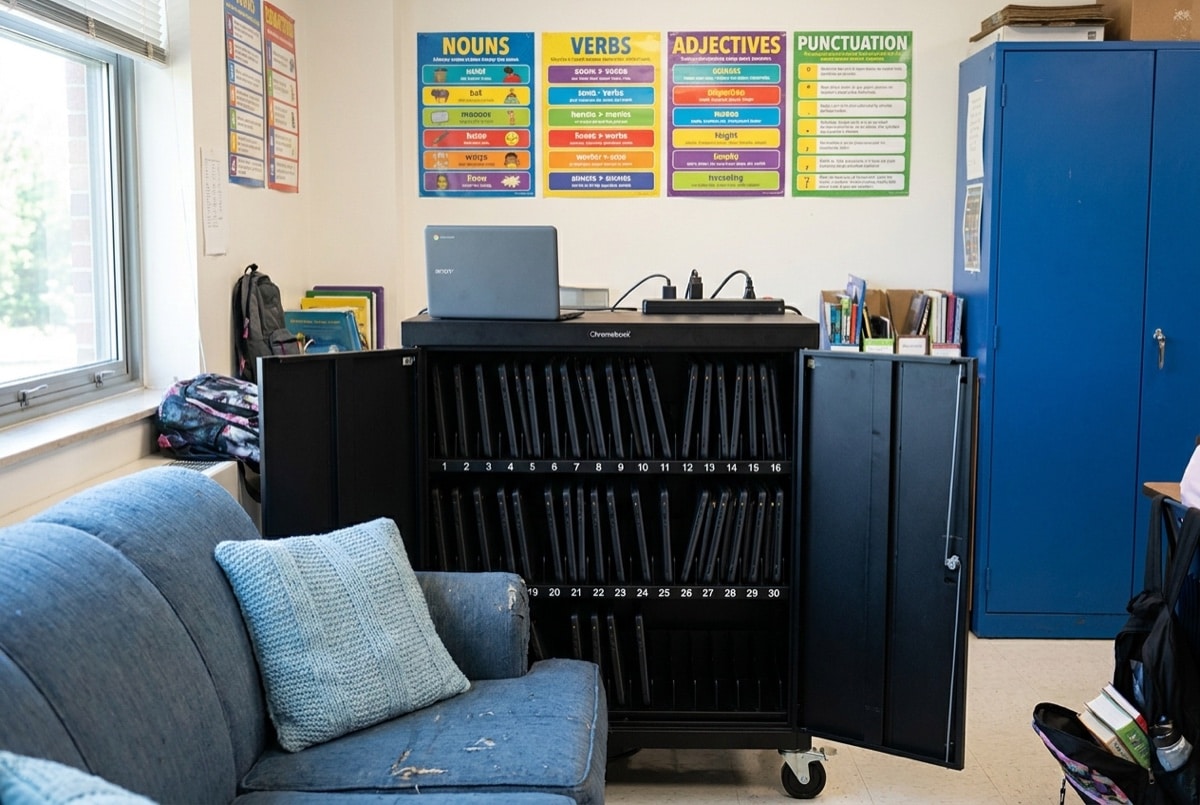
Administrators had been watching what students actually did with the devices. Without phones, which were already restricted, kids had found a workaround: school Chromebooks. YouTube. Games. Taunting classmates via Gmail. The devices that were supposed to unlock learning had become the school’s biggest distraction. So the school made a decision: laptops would still exist, but they’d be used only for specific teacher-assigned tasks. The rest of the day — notes, drafts, exercises, thinking — would happen on paper.
The response from students was not what you might expect. Jade LeGron, 13, told reporters the change had been “super beneficial” — students had stopped fighting with teachers over video games, and the Gmail-based bullying had dried up almost immediately. The school’s principal, Inge Esping, was named Kansas’s middle school Principal of the Year for 2025. Whatever McPherson was doing, someone noticed it was working.


This Is Bigger Than One School in Kansas
McPherson isn’t alone. Across the country, schools and parents are pushing back against the edtech wave in ways that would have seemed radical just a few years ago.
In Wichita, Marshall Middle School introduced “tech-free Fridays.” In Pennsylvania, parents in the Lower Merion School District are locked in a standoff with administrators over the right to opt their children out of school-issued Chromebooks entirely — a right the district has resisted granting. Parent-led networks are forming in districts across the country, sharing strategies for reducing screen time in the classroom and pushing for pen-and-paper alternatives.
At the legislative level, Kansas introduced a bill in January that would ban laptops and tablets in kindergarten through fifth grade, and cap device use for middle schoolers at one hour per school day. It is one of the first attempts in the country to put statutory limits not just on phones — which many states have already acted on — but on the full range of classroom devices.
The NBC News investigation that documented the movement found that parents weren’t technophobes or Luddites. Many work in tech themselves. Their concern was narrower and more specific: that handing a child a laptop eight hours a day and calling it education had been a mistake, and that the evidence was now impossible to ignore.
What the Research Actually Says
The backlash isn’t just gut feeling. A growing body of research supports what many teachers have been observing in their classrooms for years. Studies consistently show that students retain information better when they take notes by hand than when they type — the act of translating ideas into written words forces a kind of processing that copy-pasting simply doesn’t. Screen fatigue is real and measurable. And the research on multitasking — which is what most students are actually doing when a laptop is open — is unambiguous: it degrades performance on the primary task.
There is also the question of equity. The argument that technology levels the playing field has always been more complicated than it sounds. Students from lower-income households often have less parental oversight of device use, less quiet space for focused work, and less access to tech support when something breaks. A “digital-first” classroom can widen gaps as easily as it closes them.

What This Means for Teachers Right Now
If you’ve been feeling like the technology in your classroom is working against you as often as it’s working for you, this movement is worth paying attention to. A few things are worth knowing:
You probably have more room than you think. Most schools don’t mandate that devices be open and in use at all times. Many teachers who have started restricting laptop use to specific tasks — research, collaborative documents, digital assessments — report immediate improvements in classroom focus. You don’t necessarily need a policy change to start experimenting.
Parent support is growing. The opt-out movement and the parent-led advocacy around device reduction means that teachers who want to push back on tech-heavy approaches are increasingly likely to find parent backing rather than resistance. That changes the dynamic with administration significantly.
The data conversation is shifting. For years, anyone who questioned edtech was easily dismissed as resistant to change. That’s no longer the case. Schools like McPherson — whose principal won Principal of the Year — are demonstrating that reducing device use isn’t an admission of failure. It’s a data-driven decision. That gives teachers who feel the same way a much stronger position from which to advocate.
The devices aren’t going away. But the conversation about when, how, and how much to use them has fundamentally changed — and teachers who have been quietly skeptical for years are finally being heard.
Frequently Asked Questions
Which school started the Chromebook pushback?
McPherson Middle School in Kansas sent a letter home in December 2025 asking families of its 480 students to return school-issued Chromebooks, restricting device use to specific teacher-assigned tasks only.
Is there research behind the backlash against classroom laptops?
Yes — studies show students retain information better when handwriting notes versus typing, and research on multitasking shows it degrades performance on the primary task at hand.
Are other states considering laws limiting classroom devices?
Yes — Kansas introduced a bill that would ban laptops and tablets in grades K-5 and cap middle-school device use at one hour per day, one of the first statewide efforts to regulate classroom devices beyond just phones.
3 Responses
Why are examples sick as “Students using school Gmail accounts to taunt each other. Kids pulling up YouTube the moment a teacher turned to the board” being blamed on technology use at school? The issue is that students are not following directions and not being held accountable at home when they break school rules. Banning the use of Chromebooks at school is not going to create better humans or stronger learners when they return home to countless hours of screen time. While I agree that technology in school should be used skillfully and with limits, technology use at school is not the problem. The screen addiction begins when cell phones and tablets are used to occupy children at restaurants, provide entertainment during downtime, or allow adults to complete tasks without interruption instead of using those moments as opportunities for children to develop important skills through conversation, reading, creativity, and problem-solving. This early technology use is rewiring childrens’ brains. Children are coming to school accustomed to the fast-paced overstimulation of scrolling or gaming, so they struggle to slow down and focus on deep learning. Researcher David Levy has coined it “popcorn brain”. Schools should continue teaching appropriate digital citizenship and purposeful technology use, but those lessons are most effective when students arrive with a foundation of focus, responsibility, and healthy boundaries around screens.
Why are examples such as “Students using school Gmail accounts to taunt each other. Kids pulling up YouTube the moment a teacher turned to the board” being blamed on technology use at school? The issue is that students are not following directions and not being held accountable at home when they break school rules. Banning the use of Chromebooks at school is not going to create better humans or stronger learners when they return home to countless hours of screen time. While I agree that technology in school should be used skillfully and with limits, technology use at school is not the problem. The screen addiction begins when cell phones and tablets are used to occupy children at restaurants, provide entertainment during downtime, or allow adults to complete tasks without interruption instead of using those moments as opportunities for children to develop important skills through conversation, reading, creativity, and problem-solving. This early technology use is rewiring childrens’ brains. Children are coming to school accustomed to the fast-paced overstimulation of scrolling or gaming, so they struggle to slow down and focus on deep learning. Researcher David Levy has coined it “popcorn brain”. Schools should continue teaching appropriate digital citizenship and purposeful technology use, but those lessons are most effective when students arrive with a foundation of focus, responsibility, and healthy boundaries around screens.