

The Trump administration’s One Big Beautiful Bill Act excluded teaching from its “professional degree” list, cutting federal graduate loan limits for teachers from unlimited cost-of-attendance coverage to a $100,000 lifetime cap, effective July 1, 2026.
If you’re a teacher reading this, you already know the financial reality of the profession. You chose a career that asks more of you than most, pays you less than many, and requires you to spend thousands of dollars getting qualified before you ever set foot in a classroom. Many of you didn’t stop at a bachelor’s degree. You went back to school — or you’re thinking about it — because a master’s degree can unlock a higher pay grade, open the door to administration roles, or simply make you a more effective educator for your students.
The average master’s degree in education costs between $30,000 and $60,000 in total. Most teachers fund that through federal student loans — the same loans available to doctors, lawyers, and engineers. For years, the system worked the same way for everyone pursuing a graduate degree. A federal loan was a federal loan.
That’s no longer the case.
Something has changed in how the federal government classifies your degree — and the financial consequences are significant enough that every teacher currently carrying student loan debt, or considering going back to school, needs to understand exactly what happened and what it means for them going forward.
The Law That Changed the Rules
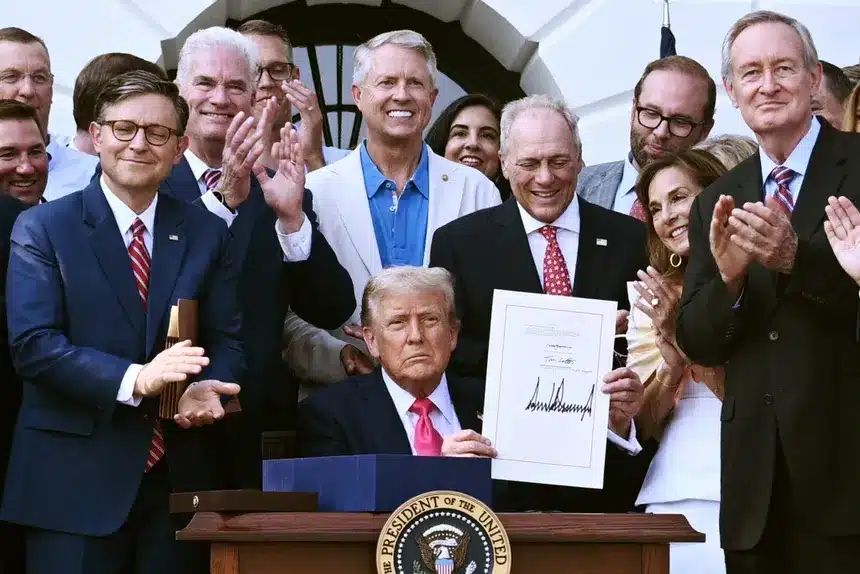
In July 2025, President Trump signed the One Big Beautiful Bill Act into law. Tucked inside its many provisions was a sweeping restructuring of federal graduate student loans. The graduate PLUS loan program — which previously allowed students to borrow up to the full cost of attendance regardless of their field — was eliminated. In its place came two fixed borrowing tiers, determined entirely by what kind of degree you’re pursuing.
The top tier is reserved for professional degrees. Students in qualifying programs can borrow up to $50,000 per year, with a lifetime cap of $200,000. The lower tier covers everyone else: up to $20,500 per year, with a lifetime cap of $100,000 — including any debt carried over from your undergraduate degree.
Which fields made the professional degree list? Medicine. Law. Dentistry. Pharmacy. Clinical psychology. Fields where graduates routinely earn six-figure salaries and have the earning power to repay substantial debt over a career.
The Department of Education was then tasked with deciding, field by field, who qualifies. Its final rule was published in April 2026 and takes effect July 1, 2026.
You can probably see where this is going.
Where Does Teaching Land? Not Where You’d Expect.
Teaching did not make the professional degree list.
The Department of Education’s reasoning: entry-level teaching positions require only an undergraduate degree. While some states mandate a master’s within a few years of starting, that graduate credential is not the minimum requirement to enter the profession — not in the same way a law degree is required to practice law or a medical degree to practice medicine. Therefore, education does not meet the statutory definition of a professional program. Your master’s in education now carries the same federal borrowing limit as a degree in any other non-professional field.
Here is what that looks like in numbers. The average master’s degree in education costs roughly $62,820 over two years. Under the new rules, the total lifetime federal borrowing limit for education graduate students is $100,000 — and that figure includes any undergraduate debt you’re still carrying. For many teachers, the ceiling will be lower than the actual cost of their education.


What This Means If You’re in Grad School — or Planning to Go Back
If you are currently enrolled in a graduate education program, the new borrowing limits apply to any loans you take out from July 1 onward. If you are approaching the $100,000 lifetime cap — factoring in your undergraduate balance — you will not be able to borrow more through federal programs to finish your degree. You will need to turn to private lenders, who charge higher interest rates and, critically, do not qualify for income-driven repayment plans or Public Service Loan Forgiveness (PSLF).
For those considering returning to school: before you enroll, check your current federal loan balance against the new cap and calculate how much federal funding is actually still available to you. A program that was previously fully coverable through federal loans may now leave a significant shortfall that private borrowing — at higher cost — would have to fill.
One unchanged option worth knowing: PSLF remains in place. If you work in a public school and make 120 qualifying payments under an income-driven repayment plan, your remaining federal balance can still be forgiven. That program has not been altered, and it becomes even more valuable now that borrowing flexibility has shrunk. Check your eligibility and payment count at studentaid.gov.
The Pushback Has Already Started
The education community’s response has been immediate. A coalition of 14 education organizations, led by the American Association of Colleges for Teacher Education, issued a formal warning that excluding education from the professional degree category will reduce enrollment in graduate education programs, increase dropout rates among those who do enroll, and deepen existing shortages in high-demand specialties like special education, bilingual education, and school counseling — areas already struggling to recruit and retain qualified staff.
Several states have moved beyond statements to legal action. Pennsylvania Governor Josh Shapiro filed a lawsuit challenging the loan caps. Massachusetts Governor Maura Healey formally called on the administration to reverse course, warning that the policy will make it harder to recruit the next generation of teachers at exactly the wrong moment. Nursing — also excluded from the professional degree list — has seen parallel legal challenges from healthcare groups who argue the same point: you cannot cut off the financial pathway into a profession and then be surprised when the shortage worsens.
Whether these legal challenges will succeed, or arrive in time to affect the July 1 implementation date, remains uncertain. The political will to push back is growing — but the rule, for now, stands.
What You Can Do Right Now
If you’re currently repaying loans: Log into studentaid.gov and review your total federal balance and repayment plan. If you’re on an income-driven plan and working at a qualifying public school, verify your PSLF payment count. The program remains your most powerful tool for managing education debt.
If you’re considering grad school: Ask your district HR department about tuition reimbursement. Many districts offer partial or full reimbursement for graduate coursework directly related to your teaching role — money you never have to repay. Some states also run their own loan forgiveness or scholarship programs specifically for teachers in shortage subjects or high-need schools. These programs matter more now than they did a year ago.
If you’re angry about it: Contact your state and federal representatives. The legal and political pushback is real, and constituent voices are part of what drives it. You can find your representatives at congress.gov.
Teaching has always demanded more than the system gives back. It just became a little harder to afford getting there.
Frequently Asked Questions
Why isn’t teaching considered a “professional degree” for federal loans?
The Department of Education says entry-level teaching jobs only require a bachelor’s degree, so a master’s isn’t the minimum credential to enter the profession — unlike law or medicine, which require the graduate degree itself to practice.
What’s the new federal loan cap for teachers in grad school?
A $100,000 lifetime cap (including undergraduate debt), down from previously unlimited cost-of-attendance borrowing under the eliminated Grad PLUS program. The cap took effect July 1, 2026.
Is Public Service Loan Forgiveness still available to teachers?
Yes — PSLF was not changed by this rule. Teachers at qualifying public schools can still have remaining federal loan balances forgiven after 120 qualifying payments under an income-driven repayment plan.
One Response
Interesting article. I find it so hard to believe that teachers are spending around 100k on masters programs. At my district, (and my district is one of the top paying in the state)it would take 17 years to earn that back. 17 years. If teachers are finding programs that cost that much, they need to walk down the hall to the math teacher and have them explain the ROI. I am just finishing up an online Master’s degree that only cost 5k a semester, with no credit caps. Perhaps the government limited loan assistance will encourage universities to lower their prices.