
In September 2025, the House Appropriations Committee advanced a bill cutting Title I funding for low-income schools by 26% and the overall Education Department budget by 15%. In January 2026, Congress passed a final deal that rejected those cuts and gave Title I a $20 million increase instead — but a closer look shows that “win” barely keeps pace with a single year of inflation, let alone four.
A Bill That Would Have Gutted Title I
Last September, the House Appropriations Committee spent a full day debating the fiscal year 2026 budget for the Department of Education — and what came out of that markup was one of the more aggressive cuts to federal school funding in years.
The committee voted 35-28, along party lines, to advance a bill slashing Title I funding for low-income schools by 26% (about $4.7 billion) and cutting the overall Education Department budget by 15%, down to $67 billion. The plan also eliminated Title II funding for teacher professional development entirely, along with Title III English language acquisition grants and adult education programs. It closely mirrored President Trump’s own budget request, but broke sharply from a bipartisan Senate plan that would have increased Education Department funding to $79 billion.
Rep. Robert Aderholt, R-Ala., who chairs the subcommittee that oversees education spending, called the bill a matter of “fiscal sanity.” The committee’s own report leaned on disappointing test scores to justify the cuts, noting that “federal tax dollars have not been shown to result in meaningful improvement in student achievement” — timed to land the same day new NAEP results showed 12th grade math and reading scores had each dropped 3 points since 2019.
The Backlash Was Immediate
Rep. Rosa DeLauro, D-Conn., the committee’s ranking member, called the bill an “assault on education,” pointing out that the Title I cuts alone would remove at least 72,000 teachers from classrooms in low-income communities.
AASA, The School Superintendents Association, sent appropriations leaders a letter urging them to reject the proposal. Even accounting for small increases to special education and career and technical education funding elsewhere in the bill, the letter said those amounts “are negligible compared to the magnitude of reductions elsewhere.” AASA’s Tara Thomas put it bluntly: “This proposal provides less funding per pupil for this year’s graduating class — the 2026 seniors — than it provided when they were in kindergarten.”
The timing made the fight feel even higher-stakes. The proposal landed while the Office of Management and Budget was already sitting on more than $6 billion in delayed grants for after-school programs, English learners, and teacher training, and while the Education Department was working through the aftermath of laying off roughly half its staff earlier in the year.



What Congress Actually Passed in January
The House and Senate spent the following months reconciling their very different starting points. The result, folded into a larger omnibus spending package covering defense, transportation, labor, and health funding, passed the House 341-88 on January 22, 2026.
For education, it was close to a full reversal of the September proposal. Title I-A local grants and IDEA state grants each received a $20 million increase — landing at $18.4 billion and $14.23 billion respectively. Every other major K-12 formula grant program Republicans had targeted for cuts or elimination — Title II professional development, Title III English language acquisition, Title IV-A student support, and Title IV-B afterschool grants — was preserved at current funding levels. Head Start got an $85 million bump. The bill also added language requiring congressional approval before any K-12 programs could be shifted out of the Education Department to another federal agency, and language meant to stop OMB from withholding formula grant funding the way it did in the summer of 2025.
Education groups treated it as a genuine win. NAESP called it “very good news for K-12 education.” Given the starting point — a proposal that would have cut $4.7 billion from Title I alone and zeroed out two entire formula grant programs — that reaction is understandable.
Why “Won” Is Doing a Lot of Work Here
Here’s the catch: a $20 million increase on an $18.4 billion program is a bump of about 0.1%. Title I has now been effectively flat-funded for three consecutive years. Meanwhile, consumer prices have climbed roughly 9% over the past four years, according to Bureau of Labor Statistics data — which means a school district getting the “same” federal check as last year is actually able to buy noticeably less with it. AASA’s warning from September, that this year’s graduating seniors are getting less real funding per pupil than they got in kindergarten, doesn’t stop being true just because the bill that would have made it dramatically worse got rejected.
The structural threats from earlier in the year haven’t fully gone away either. The new language requires congressional approval before K-12 programs move to another agency — that’s a real check, but it’s not a ban, and the committee report itself had to note that no legal authority currently exists for such a move in the first place, which is a strange thing to spell out if the administration weren’t still actively pursuing it. An April 2025 executive order directing the education secretary to begin winding down the department’s operations is still on the books. And the Education Department is still operating at roughly half its pre-2025 staffing level, regardless of what the funding topline says.
The Fight Isn’t Over
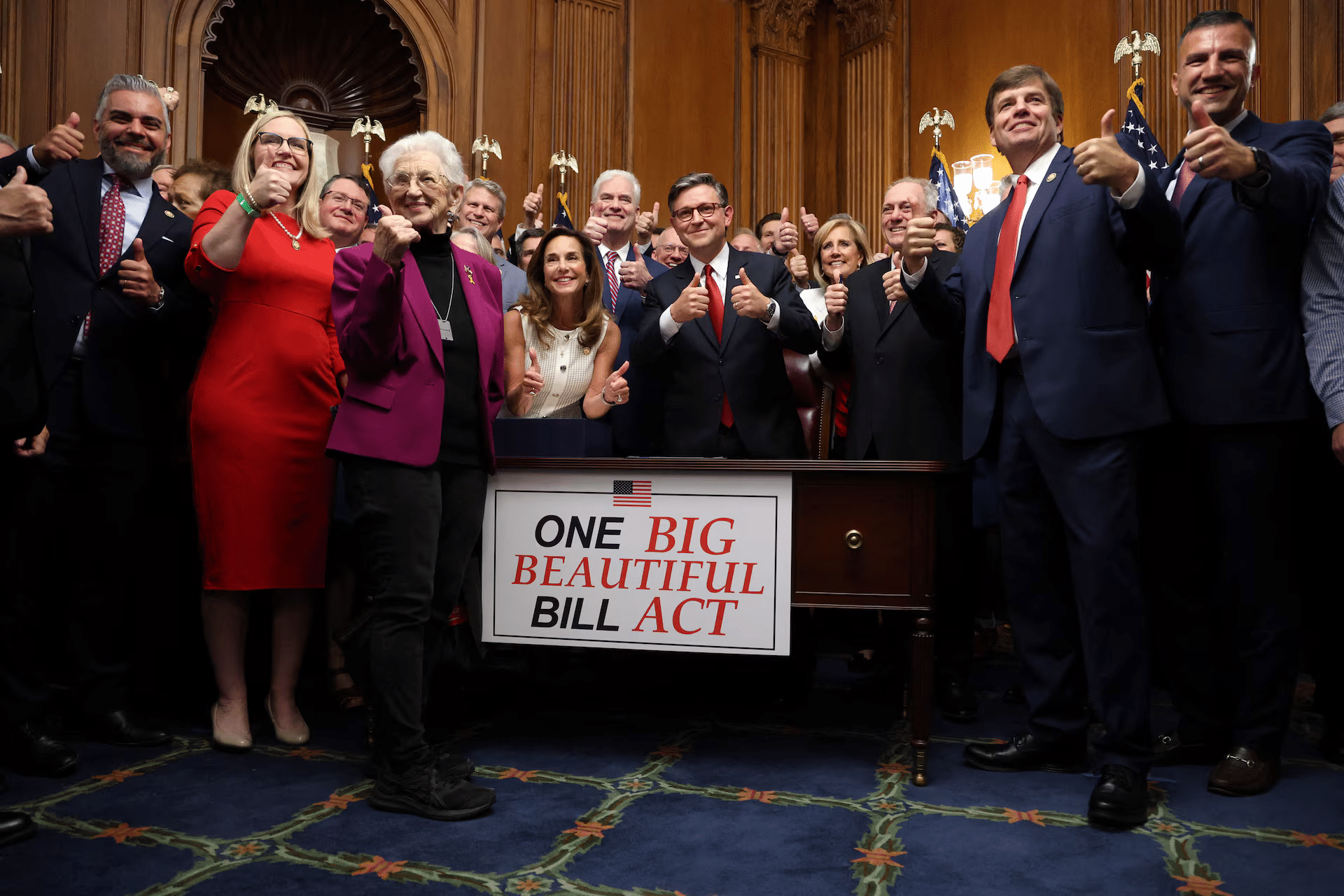
This wasn’t the only major piece of legislation moving through Congress during this stretch. In July 2025, lawmakers passed the sweeping “One Big Beautiful Bill,” which included the first federally funded private school choice program offered nationwide — a signal of where a chunk of federal education-adjacent dollars are now headed, even as formula grants for public schools sat flat.
And the FY26 fight wasn’t a one-time event. The Trump administration’s FY27 budget request, released in April 2026, proposes eliminating more than a dozen K-12 programs and over $8 billion in funding all over again — including folding 17 separate programs into a new $2 billion “Make Education Great Again” block grant that would require states to spend most of it on literacy and math instruction, with no dedicated funding left for things like school safety, rural education support, or homeless youth services. Title I and IDEA would again be nominally preserved, but the same coalition of superintendents, principals, and teachers unions that fought the FY26 cuts is already gearing up to do it again.
What This Means for Schools This Year
For district budget planners, the practical upshot is that FY26 federal funding will look almost identical to FY25 — no windfall, but no catastrophe either. The programs that were on the chopping block are still there. But “flat” isn’t neutral when costs keep rising, and the same fight over deeper cuts is already restarting for FY27. Superintendents and principals who spent last fall lobbying against the September proposal are, by all appearances, about to do it again.
Frequently Asked Questions
Did Congress cut Title I funding for FY26?
No. While the House Appropriations Committee initially proposed a 26% cut, the final FY26 deal passed in January 2026 gave Title I a $20 million increase instead, to $18.4 billion — though that’s essentially flat funding for the third consecutive year once inflation is factored in.
What did the original House proposal include?
The House Appropriations Committee’s September 2025 bill would have cut Title I by 26% (about $4.7 billion), reduced the overall Education Department budget by 15% to $67 billion, and eliminated Title II teacher professional development funding and Title III English language acquisition grants entirely.
Is federal education funding at risk again?
Yes. The Trump administration’s FY27 budget request, released in April 2026, again proposes eliminating more than a dozen K-12 programs and over $8 billion in funding, following a similar pattern to the rejected FY26 proposal.