
Rep. Suzanne Bonamici, D-Ore., has filed articles of impeachment against Education Secretary Linda McMahon — the first impeachment effort ever launched against a U.S. education secretary. The resolution accuses McMahon of illegally transferring more than 140 programs out of the Department of Education to other federal agencies without congressional approval, making false statements to Congress, and gutting the department’s staff by half.
A House Democrat Just Moved to Impeach the Education Secretary
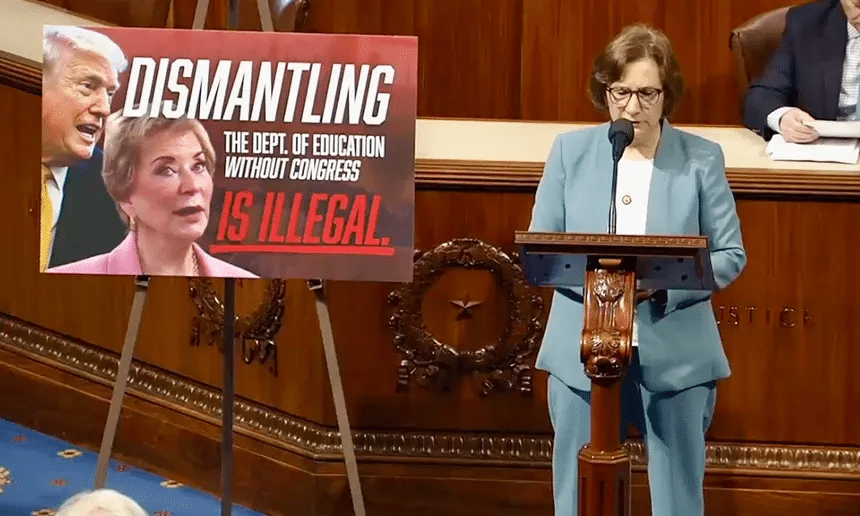
On June 25, 2026, Rep. Suzanne Bonamici introduced a resolution on the House floor to impeach Education Secretary Linda McMahon. It’s a historic first — no U.S. education secretary has ever faced impeachment proceedings before.
The resolution, cosponsored by 16 fellow House Democrats, accuses McMahon of violating her oath of office, making false and misleading statements to Congress, and illegally moving the operations of multiple Education Department offices to other federal agencies without lawmakers’ approval — something Bonamici argues only Congress itself has the legal authority to do, since Congress is the body that created the department in the first place.
“Secretary McMahon has made it her mission to close down the Department of Education, something she does not have the right to do,” Bonamici said in introducing the resolution.
What McMahon Is Actually Accused Of
The resolution lays out a specific, dated timeline of interagency agreements Bonamici says amount to McMahon dismantling the department piece by piece, without Congress ever voting to authorize it:
On May 21, 2025, programs under the Carl D. Perkins Career and Technical Education Act were moved to the Department of Labor. On September 30, 2025, McMahon approved transfers of programs under both the Elementary and Secondary Education Act and the Higher Education Act to the Department of Labor. On February 20, 2026, additional programs under those same two laws were moved to the Department of Health and Human Services and the State Department, respectively. Then, on June 15, 2026, McMahon approved what may be the most consequential moves yet: shifting special education services under the Individuals with Disabilities Education Act and the Rehabilitation Act to HHS, and handing enforcement of civil rights protections — covering the Civil Rights Act, Title IX, the ADA, and disability and age discrimination law — to the Department of Justice.
Beyond the transfers, the resolution accuses McMahon of making false statements to the Senate HELP Committee during her 2025 confirmation hearing, where she assured senators she’d honor congressionally appropriated funding. Since then, Bonamici says, the department has canceled or withheld hundreds of grants Congress approved with bipartisan support — including mental health funding for K-12 schools and TRIO grants that help low-income students reach college. Making false statements to Congress is itself a federal crime.
The resolution also points to the department’s staffing collapse: roughly 2,000 employees gone, cutting the workforce by at least half, which Bonamici says has left the department unable to disburse funding on time or investigate discrimination complaints in schools.
Bonamici’s Case, in Her Own Words
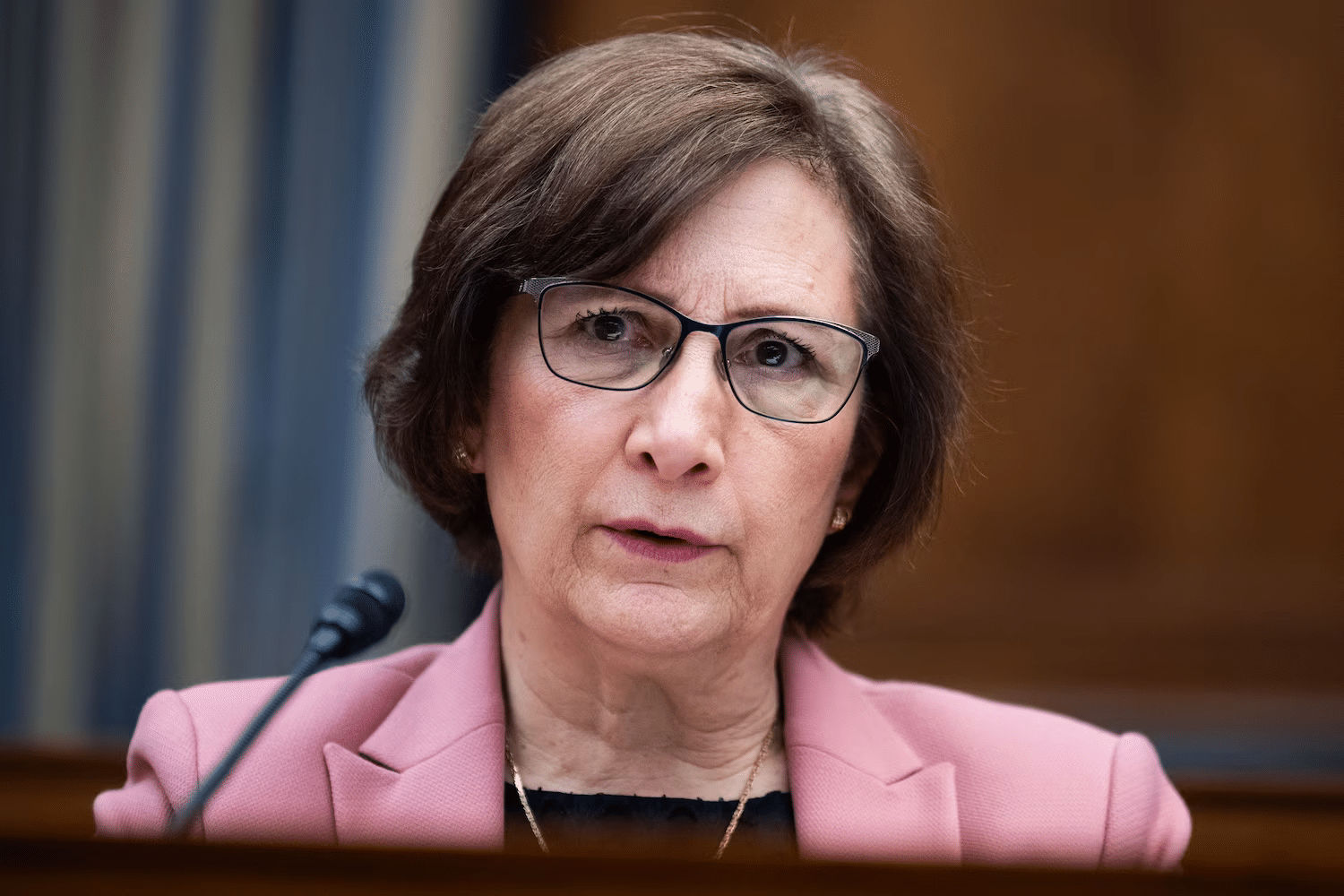
“It’s completely out of bounds,” Bonamici told ABC News after her floor speech. “You can’t just unilaterally move a program that Congress put at the Department of Education and put it somewhere else.”
She was blunter still at the Capitol: “This is not what an interagency agreement is for. It’s not to be used to shut down a department.”
Bonamici, a senior member of the House Education Committee who has represented Oregon since 2012, framed the fight in personal terms tied to families she represents. “From the stories that I’m hearing in the community, especially from the disability rights groups: I could not stand by,” she said. “I’m just not going to sit by and stay silent when it’s public education being dismantled and really harmed.”


McMahon’s Response: “Do Better”
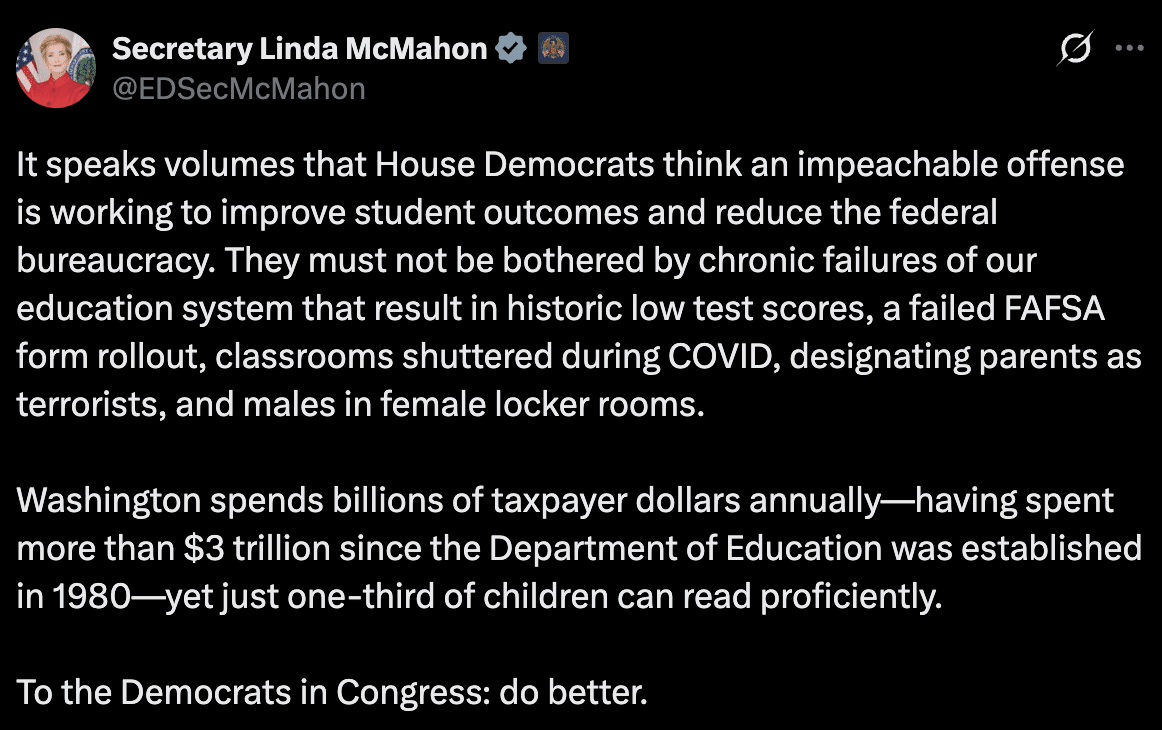
McMahon didn’t hold back. Responding on X after Bonamici announced the impeachment push, she wrote: “To the Democrats in Congress: do better. It speaks volumes that House Democrats think an impeachable offense is working to improve student outcomes and reduce the federal bureaucracy. They must not be bothered by chronic failures of our education system that result in historic low test scores, a failed FAFSA form rollout, classrooms shuttered during COVID, designating parents as terrorists, and males in female locker rooms.”
The Department of Education has defended the transfers as legally sound, arguing that policy and oversight authority for the moved programs technically remain vested at the Education Department even as day-to-day operations shift elsewhere — meaning, officials say, that no student actually loses any rights or services in the process.
Rep. Tim Walberg, R-Mich., who chairs the House Education Committee and has been a consistent supporter of McMahon’s agenda, dismissed the impeachment effort entirely: “Secretary McMahon is doing exactly what voters elected President Trump to do: rein in a bloated bureaucracy and put students, parents, and taxpayers first. Disagreeing with that agenda does not make it impeachable.”
Does This Actually Go Anywhere?
Realistically, no — at least not anytime soon. Impeaching and removing a Cabinet secretary requires a majority vote in the House and a two-thirds vote to convict in the Senate. Republicans currently control both chambers, and Walberg’s statement makes clear the House GOP has no appetite to bring the resolution to a floor vote, let alone pass it.
What the effort does accomplish is forcing a public, on-the-record fight over exactly how far an agency head can go in restructuring a department Congress created — without Congress explicitly signing off. That question isn’t going away even if this particular resolution stalls.
How This Connects to the Bigger Funding Fight
This isn’t happening in isolation. When Congress finally passed its FY26 education funding deal in January 2026 — after nearly rejecting deep cuts to Title I and other programs — lawmakers added language specifically requiring congressional approval before any K-12 programs could be shifted out of the Education Department to another agency. The bill’s own committee report went out of its way to note that no legal authority currently exists for such a move in the first place.
Notice the dates: two of the transfers Bonamici cites in her impeachment resolution — the IDEA and civil rights moves — happened on June 15, 2026, months after that language was already law. Whether those specific transfers violate the funding bill’s new requirement, or route around it through a legal technicality involving interagency agreements rather than formal reorganization, is likely to become its own fight — regardless of what happens to the impeachment resolution itself.
Frequently Asked Questions
Who filed articles of impeachment against Linda McMahon?
Rep. Suzanne Bonamici, D-Ore., introduced the resolution on June 25, 2026, cosponsored by 16 other House Democrats. It’s the first impeachment effort ever filed against a sitting U.S. education secretary.
What is McMahon accused of?
The resolution accuses her of illegally transferring more than 140 Education Department programs to other federal agencies without congressional approval, making false statements to Congress during her 2025 confirmation hearing, and cutting the department’s workforce by roughly half.
Will the impeachment actually happen?
It’s very unlikely. Removing a Cabinet secretary requires a House majority vote and a two-thirds Senate vote to convict. Republicans control both chambers, and House Education Committee Chairman Tim Walberg has already dismissed the effort, calling McMahon’s actions exactly what voters elected the administration to do.
3 Responses